PG Department Of Computer Science And Applications
Eligibility: 10+2 with minimum 40% marks.
|
BCA-Semester I
Computer- Fundamentals& PC Software Principles of Digital Electrons Applied & Discrete Mathematics Lab-I based on Computer Fundamentals & PC Software Introduction to the Internet (SEC-1) (Theory) Lab-2 based on Introduction to the Internet (SEC-1) (Practical) Communication Skills in English-1 Punjabi Compulsory-1 Or Mudhli Punjabi Or Punjab History & Culture (From Earliest Times to C320) |
BCA- Semester II
Introduction to Programming using Python Computer Architecture Numerical Methods & Statistical Techniques Lab-1 based on Introduction to Programming using Python Drug Abuse: Problem, Management and Prevention (Value Added Course) VAC-I Communication Skills in English-2 (THEORY) Communication Skills in English-2 (Practical) Punjabi Compulsory-2 Or Mudhli Punjabi-2 Or Punjab History & Culture (C 320 ΤΟ 1000 Α.D.) |
|
BCA Semester III
Introduction to C Programming Data Structures & File Processing Operating Systems Cybersecurity Fundamentals (Theory) (SEC-2) Lab-1 based on Introduction to C Programming Lab-2 based on Data Structures & File Processing Lab-3 based on Cybersecurity Fundamentals (SEC-2) (Practical) English-3 (MDC-2) |
BCA Semester IV
Introduction to C + + Programming Database Management Systems Computer Networks Lab-1 based on C + + Programming Lab-2 based on Database Management Systems English-4 (AEC-2) Human Rights & Constitutional Duties (Value Added Course) (VAC-2) |
|
BCA Semester-V
Programming in Java Web Designing & Development Software Engineering Server-side Programming (SEC-3) (Theory) Lab-1: Server-side Programming (SEC-3) (Practical) Lab-2 based on Web Designing & Development Lab-3 based on Programming in Java English - 5 Internship with local public/private industry business/organization Field Practice - 1 |
BCA Semester-VI
Computer Graphics Software Project Lab-1 based on Computer Graphics English – 6 (AEC-3) Environment Studies (Value Added Course) (VAC-3) |
|
BCA Semester-VII
Cloud Computing Entrepreneurship Development Mobile Application Development Artificial Intelligence Lab-1: Mobile Application Development Data Analytics (THEORY Minor - 1) Lab-2: Data Analytics (PRACTICAL Minor - 1) Internship with local public/private/govt industry/business/organisation Field Practice-2 |
BCA Semester-VIII
Internet Technology and Protocols Technology & Ethics Cross-Platforms Mobile Application Development Machine Learning Data Visualization (THEORY Minor - 2) Lab-1: Data Visualization (PRACTICAL Minor - 2) Lab-2: Cross-Platforms Mobile Development Lab-3: Machine Learning |
Eligibility: 10+2 with minimum 40% marks.
| B.Sc. IT – Semester I Fundamentals of Computers Introduction to Programming-C Applied and Discrete Mathematics Communication Skills in English-I Punjabi/Basic Punjabi Practical – PC Computing & C Language I | B.Sc. IT – Semester II Communication Skills in English-II Punjabi/Basic Punjabi/PHC Principles of Digital Electronics Introduction to Programming-C++ Numerical Methods & Statistical Techniques Practical – C++ Language Drug Abuse: Problem, Management & Prevention |
| B.Sc. (IT) – Semester III Introduction to Python Data Structure System Analysis and Design Programming Lab-I (Python, Programming Language) Programming Lab-II (Data Structure) Environmental Studies (Compulsory) | B.Sc. (IT) Semester IV Database Management System & Oracle Internet Applications Java and Web Designing web technology Environmental Studies-II Programming Lab-I (Oracle) Programming Lab-II (Html & Java) |
| B.Sc. (IT)- Semester-V Computer Networks Operating Systems E-Business Lab-I (Computer Networks) Lab-II(Operating System) | B.Sc. (IT) – Semester VI Paper-I Computer Graphics Paper – II Applications of Computer Graphics in C++/C Paper – III Project |
Eligibility: Graduation with Comp.Sci./ IT/Comp. App./Computer Maintenance/BCA/BSc.IT/BIT OR Graduation with Mathematics as an elective subject and PGDCA/ PGDIT/ PG Diploma in E-Comm. & Internet App. or equivalent with 50% marks in the aggregate.
| Semester-I | Semester II | Semester III | Semester IV |
| Advanced-Data Structures | Theory of Computation | Advanced Software Engineering | Advanced Web Technologies using ASP.NET |
| Advanced Computer Architecture | Digital Image Processing | System Software | Microprocessor and its Applications |
| Network Design and Performance Analysis | Design & Analysis of Algorithms | Data Mining and Warehousing | Object-Oriented Modeling, Analysis, and Design |
| Discrete Structures | Cloud Computing | Concept of Core and Advanced Java | Programming Laboratory IV (Based on Advanced Web Technologies using ASP.NET) |
| Soft Computing | Distributed Database System | Network Programming | Project Work |
| Programming Laboratory – I (Based on Advanced Data Structures) | Programming Laboratory – II (Design and Analysis of Algorithms & Distributed Database Systems) | Programming Laboratory – III (Based on Advanced Java and Network Programming) |
M.Sc. (Comp. Sci.) is one of the most sought after courses as it provides ample opportunities in all job sectors. There is hardly a position where you can work without the knowledge of computers. From government to private offices and multinational companies there are a number of lucrative opportunities.
POST GRADUATE DIPLOMA IN COMPUTER APPLICATIONS
Students who have passed B.A./B.Sc./B.Com./B.E. Examination or any other equivalent examination of any Statutory University with 45% marks are eligible to join this course. The duration of this course is one year. Compartment candidates are not eligible.
Post- Graduate Diploma in Computer Applications (PGDCA) – Semester-I
- PC Computing-I (MS-Office 2003)
- PC Computing-II (Professional DTP)
- Fundamentals of Computers and Operating Systems
- Database Management System through Oracle 10g and System Analysis and Design
Post- Graduate Diploma in Computer Applications (PGDCA) – Semester-II
- Network Concepts and Management (Hardware, Software settings in Linux/Unix/NT environment)
- Programming in C
- Intro. to Scripting Language, Web Designing and Uses of Internet
- Optional Papers: 1. Programming in Visual Basic with Active X
- Optional Papers: 2. E-Commerce / Business
N.B.: Papers and combinations are subject to the rules and regulations of GNDU, Amritsar.
This program develops technical and strategic knowledge of software for different IT solutions. A graduate in this course has great opportunities in the corporate world (public as well as private sector).
Eligibility: 10+2 examination with at least 40% marks in aggregate.
| Semester-1 |
| Information Technology and Operating System PC-Computing-I |
| Semester-II |
| Database Management System PC-Computing-II |
Eligibility: 10+2 with min.45% marks.
The Bachelor of Design (B.Des) in Multimedia is a 4-year undergraduate program that combines elements of visual communication, animation, graphic design, video production, interactive media, and digital technologies. The scope of B.Des in Multimedia is broad and growing rapidly due to the increasing demand for digital content across industries.
B.Des in Multimedia offers a diverse and dynamic career path. With industries moving increasingly toward digital engagement, the demand for multimedia professionals continues to grow. The key to success is staying updated with current trends and constantly evolving your creative and technical skill set.
Course Content :
The course contents of this course are the mixture of Computers, Designs, Graphics and Fine Arts. This course focuses on the Designing and Animation. This course covers first the basics of the computers, 2D & 3D animations, HTML 5, media, audio-video editing, building of advertisements, film appreciation, designing and printing techniques, etc. In the the last two semesters there will be a project as well as industrial training.
| Semester I Drawing & Colour-1 Introduction to 30-1 Workshop-l Elements of Art and Multimedia Communication Skills in English-I Punjabi /Basic Punjabi/PHC |
Semester II Drawing & Colour-II Introduction to 3D-II Theory of Media (Print Media & Script Writing) HTML5 Workshop-II (Photography & Adobe Lightroom) Adobe Illustrator Communication Skills in English-II Punjabi Compulsory/Basic Punjabi/PHC Drug Abuse: Problem, Management & Prevention |
| Semester III Film Appreciation-1 Animation in 3D Adobe Photoshop HTML5 Adobe Indesign Project - 1 |
Semester IV Flash Java Script Al & Cloud Computing Film Appreciation II Environmental Studies (Compulsory) – II Project-II EVS |
| Semester-V Adobe Premiere Pro Adobe After Effects Workshop III Sound Editing and Recording Technical Theory of Media - II (Electronic Media) Project-III |
Semester-VI 3D Studio Max Introduction to 30 Drawing & Illustration Workshop-IV: (Stop Motion) Blender Project-IV |
| Semester-VII Maya Mudbox Project-V |
Semester-VIII 3D and Animation in Photoshop Motion Graphics for Commercials 3D Human Modelling and Animation Industrial Training |
Career Opportunities :Graduates can work in a variety of creative and technical roles, such as:
Industries Hiring Multimedia Designers :
Freelancing & Entrepreneurship :
|
Higher Education Options :
|
After B.Des (Multimedia), students can pursue M.Des (Master of Design) MFA (Master of Fine Arts) MBA (Design Management/Media Management) Specialized diplomas or certifications in VFX, animation, game design, UI/UX, etc. |
Eligibility: +2 with a minimum of 40 percent marks in the non-medical science group or its equivalent examination.
| Semesters (I-VI) |
|
Note:
Drug Abuse: Problem, Management & Prevention will be a Compulsory subject in Sem-I in B.A./B.Sc. and in Sem II in Professional Courses.
Environmental Studies will be a Compulsory subject in 3rd Semester of B.A./B.Sc. and in 4th Semester of Professional Courses.
Eligibility: +2 in any stream with minimum 50% marks.
Duration - 3+1 years
Eligibility: +2 Pass or equivalent examination.
Combination of Subjects
Compulsory Subjects: Two
English 2. Punjabi/ Basic Punjabi/ Punjab History and Culture
Elective Subjects: Three
(A Candidate can select three subjects in All, Selecting not more than one subject from any of the following sets of combination)
| Groups | Subjects |
| 1. | Hindi/ Sanskrit/ Punjabi Elective |
| 2. | Political Science |
| 3. | History/ Mathematics |
| 4. | Computer Science/ Computer Application/ Physical Education |
| 5. | Philosophy/ Geography |
| 6. | Economics/ TTM |
Vocational Subjects:
A Candidate can also opt for the vocational subjects of Tourism and Travel Management, and Computer Application.
Department of Geography & Tourism offers a six-semester vocational course in TTM in TDC (Arts)
Scope: This Course enables you to become a tour Manager, Tourism Officer, Event & Conference Manager, Marketing Executives in Hospitality Industry etc.
PG Department of Commerce & Business Management
B.Com. (Honors)
Eligibility: +2 Pass or equivalent examination.
B.Com is a 4-year honors program focused on building a strong foundation in Commerce, Business, and Finance. The course covers subjects like Financial Accounting, Business Economics, Management, Corporate Law, Taxation, Auditing, and Banking. It aims to develop analytical, managerial, and practical business skills, preparing students for careers in accounting, finance, banking, taxation, business management, or for higher studies such as M.Com, MBA, CA, CS, or CMA.
|
B.Com Semester I English Language Skills-I Punjabi (Compulsory) / Punjab History & Culture Financial Accounting Business Organization Business Statistics Computer Applications in Business (Theory) Computer Applications in Business (Practical) Entrepreneurship Mindset – I |
B.Com Semester II Appreciating English Literature – 1 Punjabi (Compulsory) / Punjab History & Culture Advanced Financial Accounting Commercial Law Business Economics Drug Abuse: Problem, Management and Prevention (Value Added Course) Entrepreneurship Mindset – I |
|
B.Com Semester III English Language Skills-2 Punjabi (Compulsory) / Punjab History & Culture Corporate Accounting Company Law Functional Management Computer Based Accounting |
B.Com Semester IV Appreciating English Literature – 2 Punjabi (Compulsory) / Punjab History & Culture Goods and Services Tax Principles and Practices of Auditing Cost Accounting Environmental Studies (Value Added Course) |
|
B.Com Semester V English Language Skills-3 Punjabi (Compulsory) / Punjab History & Culture Management Accounting Principles and Practices of Banking Financial Management Data Handling through SPSS Seminar based on Internship |
B.Com Semester VI Appreciating English Literature – 3 Punjabi (Compulsory) / Punjab History & Culture Principles and Practices of Insurance Business Environment Direct Tax Law Human Rights and Constitutional Duties Summer Training (4–6 Weeks) |
|
B.Com Semester VII Research Methodology I Seminar based on Internship Financial Market Operations Contemporary Accounting Advanced Financial Management Risk Management and Insurance |
B.Com Semester VIII Research Methodology II Portfolio Management International Financial Management International Accounting Foreign Exchange Management |
Eligibility: 10+2 with min.40% marks in any stream.
BBA (Bachelor of Business Administration) is a 4-year honors program designed to develop Managerial, Leadership, and Entrepreneurial skills.
The course covers key areas such as Management Principles, Marketing, Finance, Human Resource Management, Business Economics, Operations, and Entrepreneurship. It focuses on both theoretical knowledge and practical exposure, preparing students for careers in management, corporate sectors, startups, or for higher studies like MBA and other professional courses.
|
BBA Semester I English Language Skills-I Punjabi (Compulsory) / Punjab History & Culture Basic Accounting Business Organization and Systems Managerial Economics Computer Applications for Business (Theory) Computer Applications for Business (Practical) Entrepreneurship Mindset – I |
BBA Semester II Appreciating English Literature – 1 Punjabi (Compulsory) / Punjab History & Culture Business Laws Principles of Management Fundamentals of Banking Drug Abuse: Problem, Management and Prevention (Compulsory Paper) Entrepreneurship Mindset – I |
|
BBA Semester III English Language Skills-2 Punjabi (Compulsory) / Punjab History & Culture Statistics for Business Fundamentals of Human Resource Management Management Accounting Computer Based Accounting System |
BBA Semester IV Appreciating English Literature – 2 Punjabi (Compulsory) / Punjab History & Culture Financial Management Business Environment Fundamentals of Marketing Management Environmental Studies (Value Added Course) |
|
BBA Semester V English Language Skills-3 Punjabi (Compulsory) / Punjab History & Culture Company Law Entrepreneurship & Small Business Cost Accounting Excel for Managers Internship Based Seminar |
BBA Semester VI Appreciating English Literature – 3 Punjabi (Compulsory) / Punjab History & Culture Income Tax Fundamentals of Capital Markets Indian Financial System Human Rights and Constitutional Duties |
|
BBA Semester VII Management of Banking Operations Insurance & Risk Management Security Analysis and Portfolio Management Contemporary Issues in Accounting |
BBA Semester VIII Management of Insurance Services Fundamentals of Investment Analysis Business Analysis and Valuation Investment Banking and Financial Services |
Eligibility: B.Com./ BBA/ B.CAM /B.E-Com. with 50 percent marks in the aggregate.
M.Com (Master of Commerce) is a 2-year program focused on advanced studies in Commerce, Accounting, Finance, Economics, and Business management.
The course includes subjects such as Consumer Behavior, Corporate Finance, Taxation, HRM, Research Methodology, and Business Economics. It aims to develop analytical, research, and professional skills, preparing students for careers in teaching, research, finance, banking, corporate sector, or for professional courses like PhD, CA, CMA, and CS.
| M.Com Semester I | M.Com Semester II |
| Managerial Economics | Corporate Financial Accounting and Auditing |
| Statistical Analysis for Business (Theory) | Financial Management |
| Statistical Analysis for Business (Practical) | Research Methodology (Theory) |
| Management Principles and Organizational Behavior | Research Methodology (Practical) |
| Business Environment | Marketing Management |
| Management Accounting and Control Systems | Human Resource Management |
| Seminar | Viva Voce |
| Semester III | Semester IV |
| Banking & Insurance Services | International Accounting |
| Security Analysis & Portfolio Management | E-Commerce |
| Contemporary Accounting | International Financial Management |
| Consumer Behavior | Financial Markets & Financial Services |
| Retail Management | Corporate Tax Law & Planning |
| Seminar | Viva Voce |
Vision: This add on course focused to empower students with the knowledge, skills and confidence required to excel in national and state-level competitive examinations, enabling them to achieve meaningful careers and contribute effectively to society.
| Mission |
| To provide quality coaching integrated with academic learning |
| To enhance students’ reasoning, quantitative, analytical and general awareness abilities. |
| To promote consistent practice through structured classes, assessment and doubt sessions. |
| To create an environment that encourages academic excellence, discipline and competitive spirit. |
Department Of Physics & Electronics
Eligibility: +2 Non-Medical Science group with at least 40% marks.
| B.Sc. Non-Medical Subjects (Semester I to VI) |
|
Drug Abuse: Problem, Management & Prevention will be a Compulsory
subject in Sem-I in B.A./B.Sc. and in Sem II in Professional Courses.
Environmental Studies will be a Compulsory subject in 3rd Semester of
B.A./B.Sc. and in 4th Semester of Professional Courses.
Eligibility: +2 with a minimum of 40 percent marks in the non-medical science group or its equivalent examination.
| Semesters (I-VI) |
|
Note:
Drug Abuse: Problem, Management & Prevention will be a Compulsory subject in Sem-I in B.A./B.Sc. and in Sem II in Professional Courses.
Environmental Studies will be a Compulsory subject in 3rd Semester of B.A./B.Sc. and in 4th Semester of Professional Courses.
Department Of Biology
Eligibility: +2 Medical Science group with at least 40% marks.
| B.Sc. Medical Subjects Semesters (I to VI) |
|
Drug Abuse: Problem, Management & Prevention will be a Compulsory
subject in Sem-I in B.A./B.Sc. and in Sem II in Professional Courses.
Environmental
Studies will be a Compulsory subject in 3rd Semester of B.A./B.Sc. and in 4th
Semester of Professional Courses.
Coming Soon
Department of History
Coming Soon
Department Of Chemistry
Eligibility: +2 with at least 40 percent marks
| B.Sc. Economics Subjects Semesters (I to VI) |
|
Department of Cosmetology
Eligibility for Diploma in Cosmetology : Passed 10+2 examination with at least 40% marks in aggregate.
Eligibility for B.A. with Cosmetology: Senior Secondary Certificate Part-II (12th Class) examination of the Punjab School Education Board or any other equivalent examination recognised by this University
|
Jobs and Employment:
Makeup artist Hairstylist Skin Specialist Nail Technician Beauty Consultant Stylist for Film and Theatre Salon Manager |
Department of Economics
Eligibility: 45% Marks in Economics at graduation level or must have obtained 50% marks in aggregate at Graduation level with Economics as one of the subjects.
| Semester-I | Semester II |
| Micro Economics-I | Micro Economics-II |
| Macro Economics-I | Macro Economics-II |
| Quantitative Methods for Economics-I | Quantitative Methods-II |
| Optional Paper | Optional Paper |
| Optional Paper | Optional Paper |
| Semester III | Semester IV |
| Economics of Development | Economics of Planning |
| International Economics-I | International Economics-II |
| Indian Economy | Punjab Economy |
| Optional Paper | Optional Paper |
| Optional Paper | Optional Paper |
Department of Mathematics
Eligibility: B.A./B.Sc. with 50% aggregate or have passed Maths at B.A./B.Sc. level with 45% marks, or M.A. in any subject or B.A./B.Sc. with honors in Maths.
| Semester-I&II | Semester-III&IV |
| Real Analysis | Functional Analysis2 |
| Complex Analysis & Differential Geometry | Topology |
| Modern Algebra | Operation Research |
| Mechanics | Mathematical Statistics |
| Differential and Integral Equations | Discrete Mathematics |
Known as the mother of all sciences, Masters in Maths offers a successful career in Banking / Insurance / Research Teaching / Applied Sciences / Life Sciences / Defence, Financial and Statistical Services etc.
Department of Languages
Department of English
| Compulsory Subjects | Elective & Vocational Subjects |
|
English Punjabi / Basic Punjabi / Punjab History & Culture |
Elective Subjects (Choose Any Three) (Not more than one subject from any group) |
|
Group 1 Hindi / Sanskrit / Punjabi Elective |
Group 2 Political Science / Cosmetology |
|
Group 3 History / Mathematics |
Group 4 Computer Science / Computer Application / Physical Education |
|
Group 5 Philosophy / Geography |
Group 6 Economics / TTM / NCC |
|
Vocational Subjects Tourism & Travel Management (TTM) Computer Application |
|
|
Note: TTM can be opted ONLY with Geography as a subject. The third subject can be chosen from the above groups except Philosophy & Economics. Career Scope: This course enables you to become a Tour Manager, Tourism Officer, Event & Conference Manager, or Marketing Executive in the Hospitality Industry. |
|
Department of Punjabi
| Compulsory Subjects | Elective & Vocational Subjects |
|
English Punjabi / Basic Punjabi / Punjab History & Culture |
Elective Subjects (Choose Any Three) (Not more than one subject from any group) |
|
Group 1 Hindi / Sanskrit / Punjabi Elective |
Group 2 Political Science / Cosmetology |
|
Group 3 History / Mathematics |
Group 4 Computer Science / Computer Application / Physical Education |
|
Group 5 Philosophy / Geography |
Group 6 Economics / TTM / NCC |
|
Vocational Subjects Tourism & Travel Management (TTM) Computer Application |
|
|
Note: TTM can be opted ONLY with Geography as a subject. The third subject can be chosen from the above groups except Philosophy & Economics. Career Scope: This course enables you to become a Tour Manager, Tourism Officer, Event & Conference Manager, or Marketing Executive in the Hospitality Industry. |
|
Department of Geography & TTM
Eligbility: Senior Secondary Certificate Part-II (12th Class) examination of the Punjab School Education Board or any other equivalent examination recognised by this University.
| Semester I - Geomorphology |
| Semester II - Climatology and Oceanography |
| Semester III - Environment and Resources |
| Semester IV - Geography of Punjab |
| Semester V - World Regional Geography |
| Semester VI - Geography of India |
|
Jobs and Employment:
UPSC: IAS and PCS Academics: Teacher, lecturer, or professor Cartographer Environmental consultant Urban planner Tourism officer GIS specialist Demographer Hydrologist Landscape architect Geologist |
Scope: Explore the dynamic field of geography in Hindu College, Amritsar, where students engage in the study of Earth's physical features and human societies. By delving into the interdisciplinary nature of geography, it encompasses different aspects of physical, human, and environmental sciences, and fosters a comprehensive understanding of the world. Our geography program offers courses that examine spatial relationships, global patterns, and the impact of human activities on the environment. Students develop critical thinking skills and spatial awareness, essential for addressing complex global issues in both academic and real-world contexts. The course connects theory with practical application through fieldwork, GIS (Geographic Information Systems), and hands-on research opportunities, preparing students for diverse career paths. Collaborate with experienced faculty members who are passionate about their research and dedicated to mentoring students in their academic and professional pursuits. Whether aspiring to work in environmental management, urban planning, international relations, or beyond, our geography program equips students with the skills and knowledge needed for success in a rapidly evolving world.
Department of History
| Compulsory Subjects | Elective & Vocational Subjects |
|
English Punjabi / Basic Punjabi / Punjab History & Culture |
Elective Subjects (Choose Any Three) (Not more than one subject from any group) |
|
Group 1 Hindi / Sanskrit / Punjabi Elective |
Group 2 Political Science / Cosmetology |
|
Group 3 History / Mathematics |
Group 4 Computer Science / Computer Application / Physical Education |
|
Group 5 Philosophy / Geography |
Group 6 Economics / TTM / NCC |
|
Vocational Subjects Tourism & Travel Management (TTM) Computer Application |
|
|
Note: TTM can be opted ONLY with Geography as a subject. The third subject can be chosen from the above groups except Philosophy & Economics. Career Scope: This course enables you to become a Tour Manager, Tourism Officer, Event & Conference Manager, or Marketing Executive in the Hospitality Industry. |
|
Department of Hindi
| Compulsory Subjects | Elective & Vocational Subjects |
|
English Punjabi / Basic Punjabi / Punjab History & Culture |
Elective Subjects (Choose Any Three) (Not more than one subject from any group) |
|
Group 1 Hindi / Sanskrit / Punjabi Elective |
Group 2 Political Science / Cosmetology |
|
Group 3 History / Mathematics |
Group 4 Computer Science / Computer Application / Physical Education |
|
Group 5 Philosophy / Geography |
Group 6 Economics / TTM / NCC |
|
Vocational Subjects Tourism & Travel Management (TTM) Computer Application |
|
|
Note: TTM can be opted ONLY with Geography as a subject. The third subject can be chosen from the above groups except Philosophy & Economics. Career Scope: This course enables you to become a Tour Manager, Tourism Officer, Event & Conference Manager, or Marketing Executive in the Hospitality Industry. |
|
Department of Philosophy
| Compulsory Subjects | Elective & Vocational Subjects |
|
English Punjabi / Basic Punjabi / Punjab History & Culture |
Elective Subjects (Choose Any Three) (Not more than one subject from any group) |
|
Group 1 Hindi / Sanskrit / Punjabi Elective |
Group 2 Political Science / Cosmetology |
|
Group 3 History / Mathematics |
Group 4 Computer Science / Computer Application / Physical Education |
|
Group 5 Philosophy / Geography |
Group 6 Economics / TTM / NCC |
|
Vocational Subjects Tourism & Travel Management (TTM) Computer Application |
|
|
Note: TTM can be opted ONLY with Geography as a subject. The third subject can be chosen from the above groups except Philosophy & Economics. Career Scope: This course enables you to become a Tour Manager, Tourism Officer, Event & Conference Manager, or Marketing Executive in the Hospitality Industry. |
|
Department of Sports
| Compulsory Subjects | Elective & Vocational Subjects |
|
English Punjabi / Basic Punjabi / Punjab History & Culture |
Elective Subjects (Choose Any Three) (Not more than one subject from any group) |
|
Group 1 Hindi / Sanskrit / Punjabi Elective |
Group 2 Political Science / Cosmetology |
|
Group 3 History / Mathematics |
Group 4 Computer Science / Computer Application / Physical Education |
|
Group 5 Philosophy / Geography |
Group 6 Economics / TTM / NCC |
|
Vocational Subjects Tourism & Travel Management (TTM) Computer Application |
|
|
Note: TTM can be opted ONLY with Geography as a subject. The third subject can be chosen from the above groups except Philosophy & Economics. Career Scope: This course enables you to become a Tour Manager, Tourism Officer, Event & Conference Manager, or Marketing Executive in the Hospitality Industry. |
|


Sports Gallery
Department of Library
Gallery.
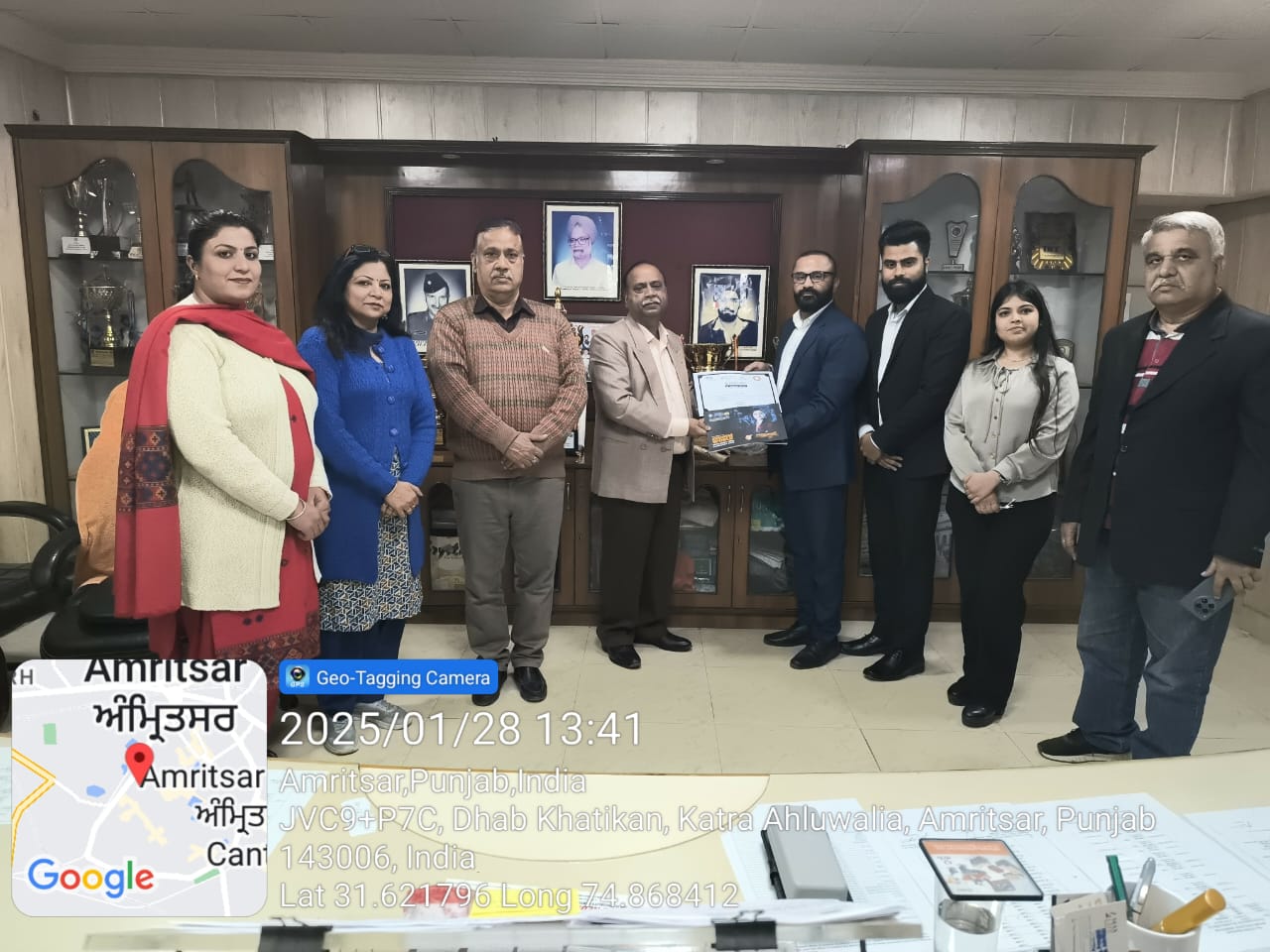
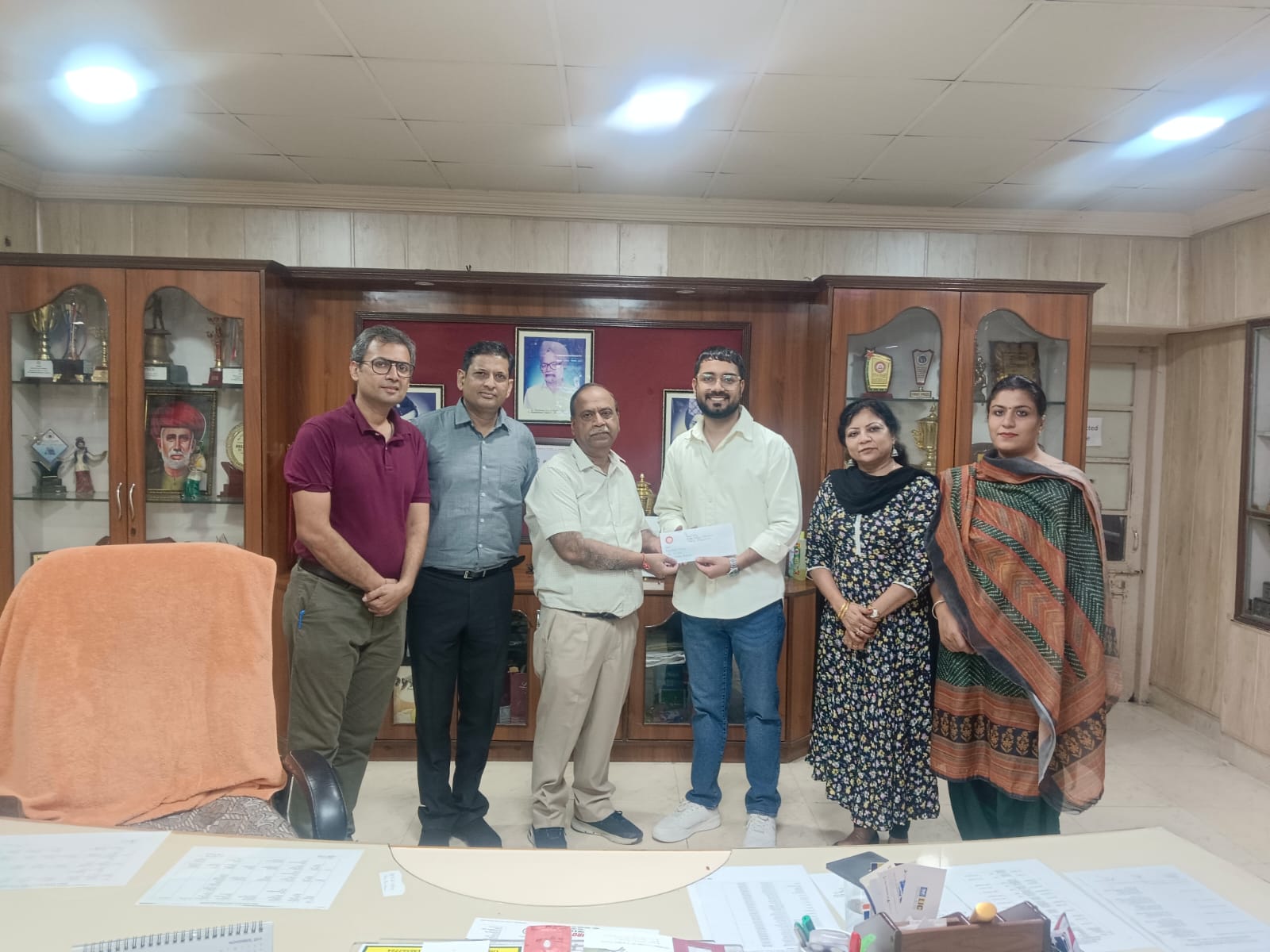
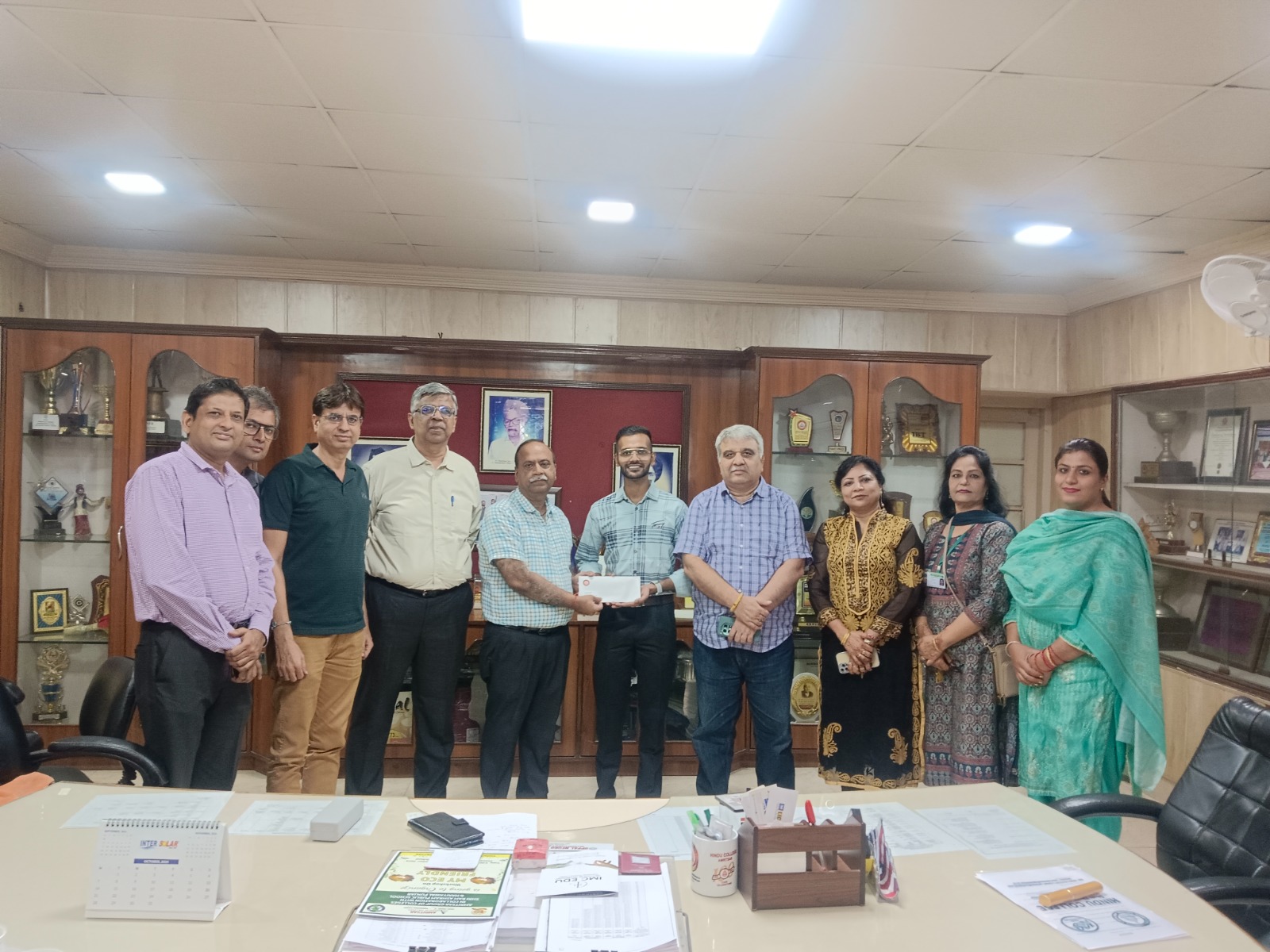
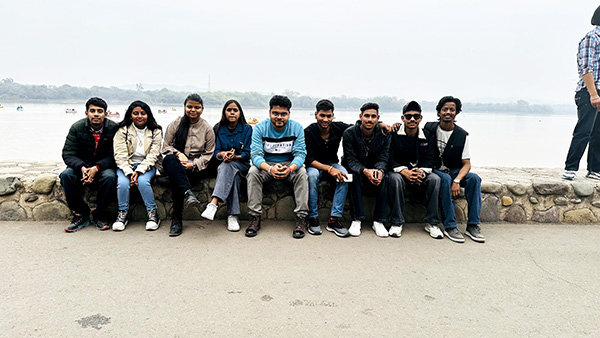
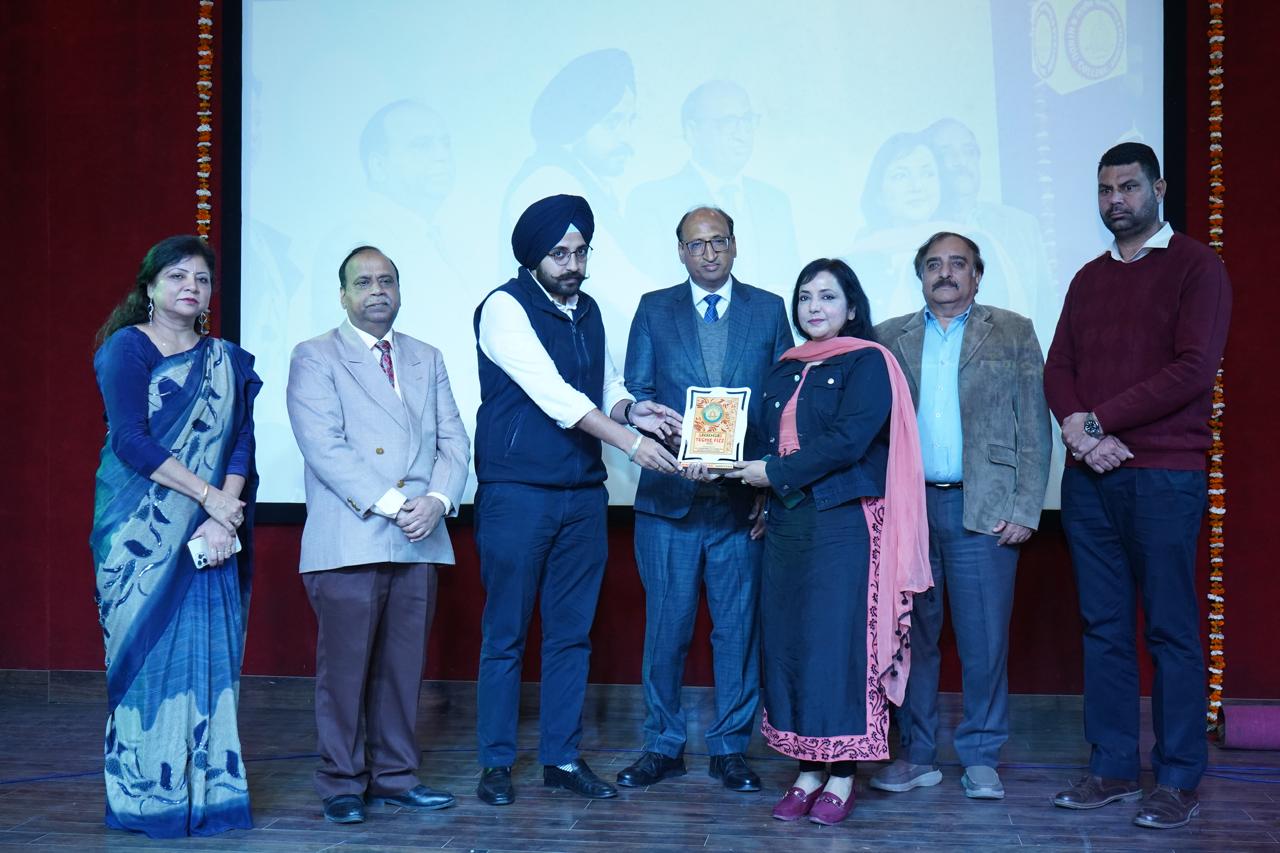
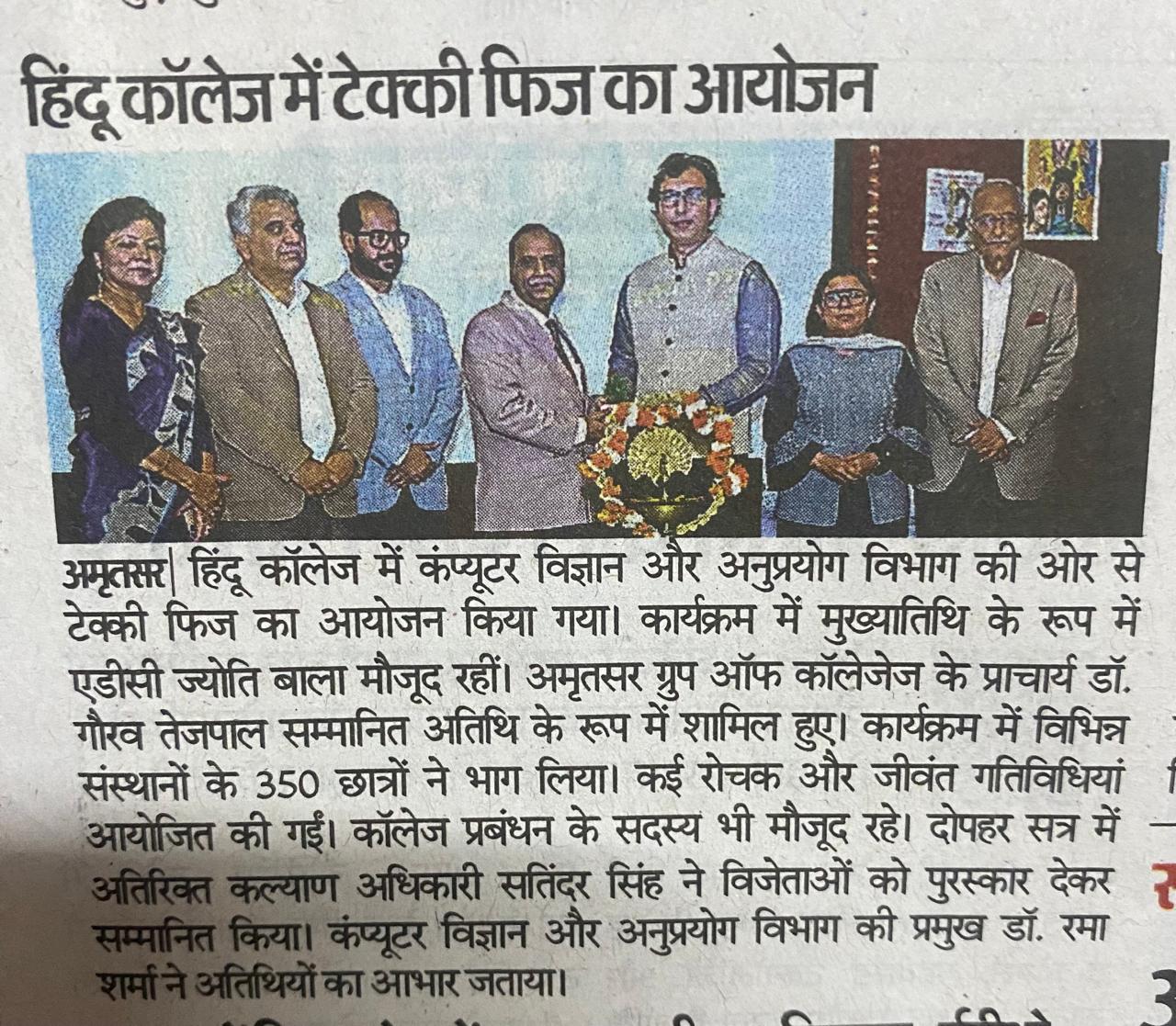
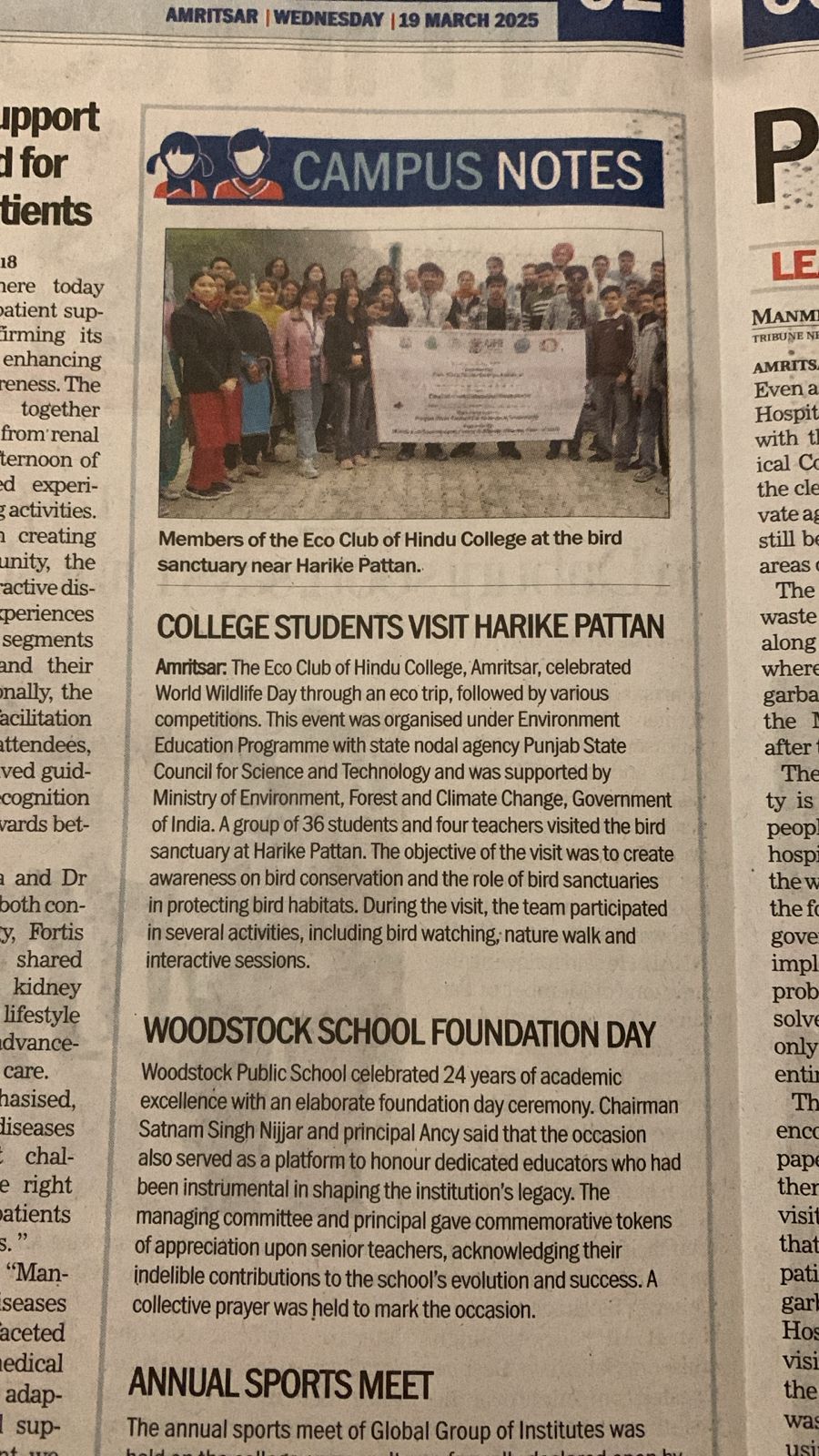
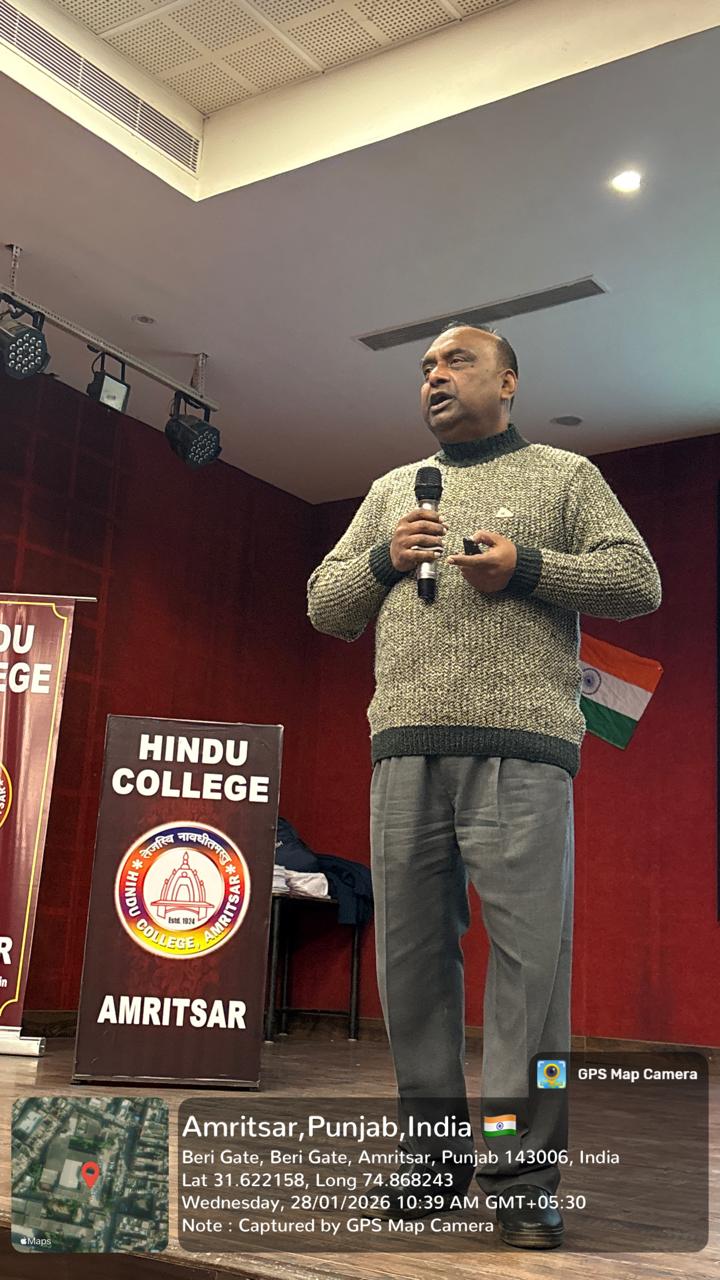
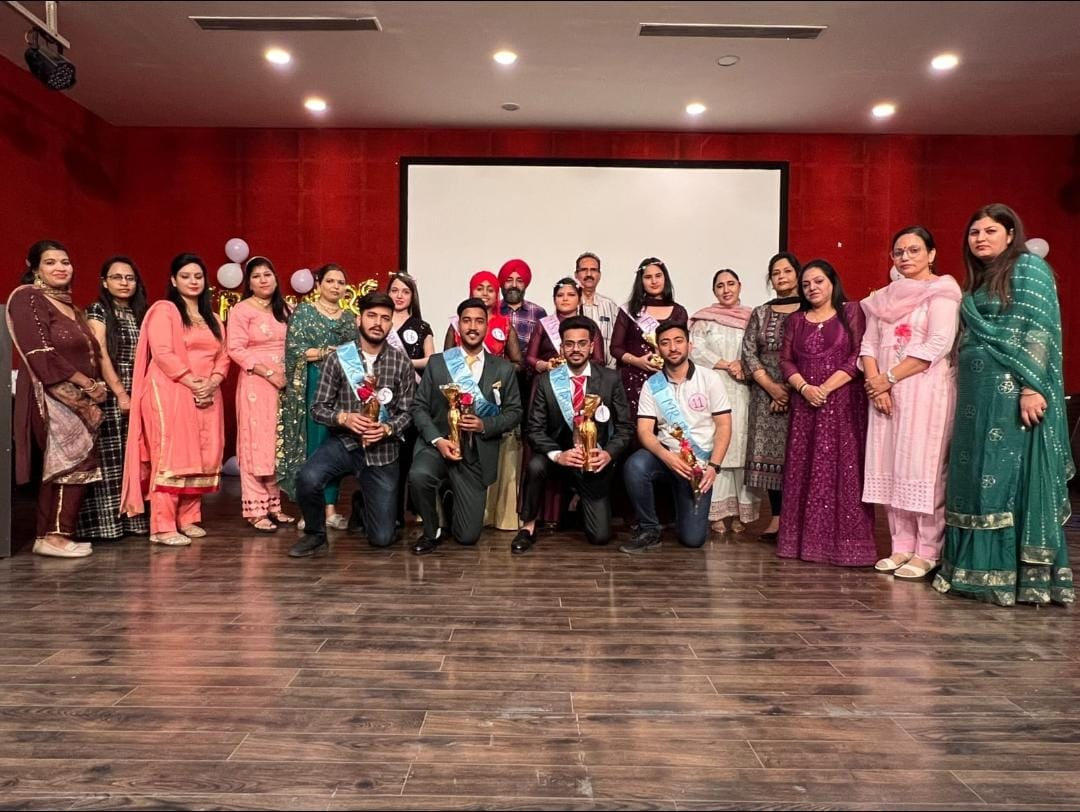
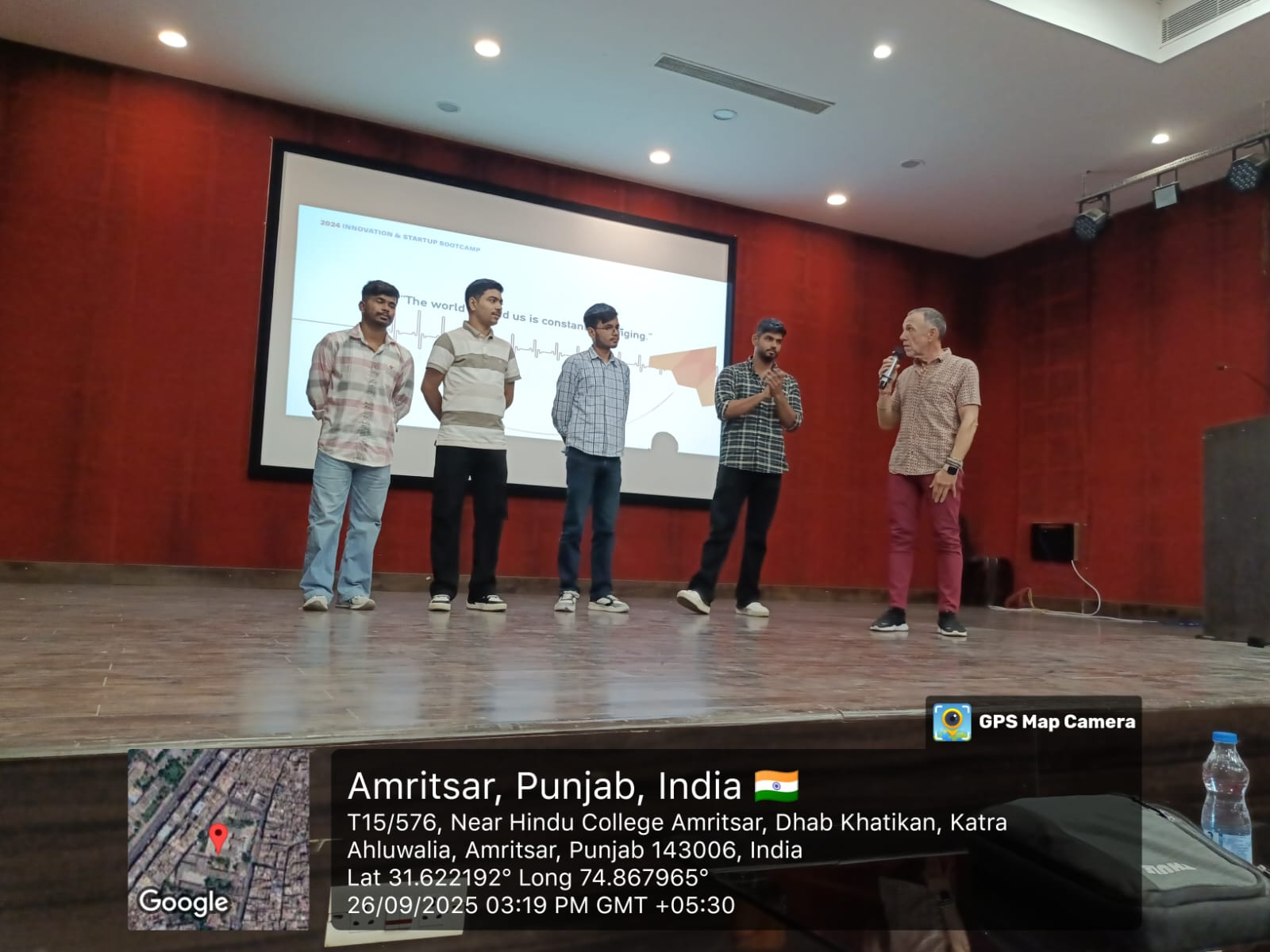
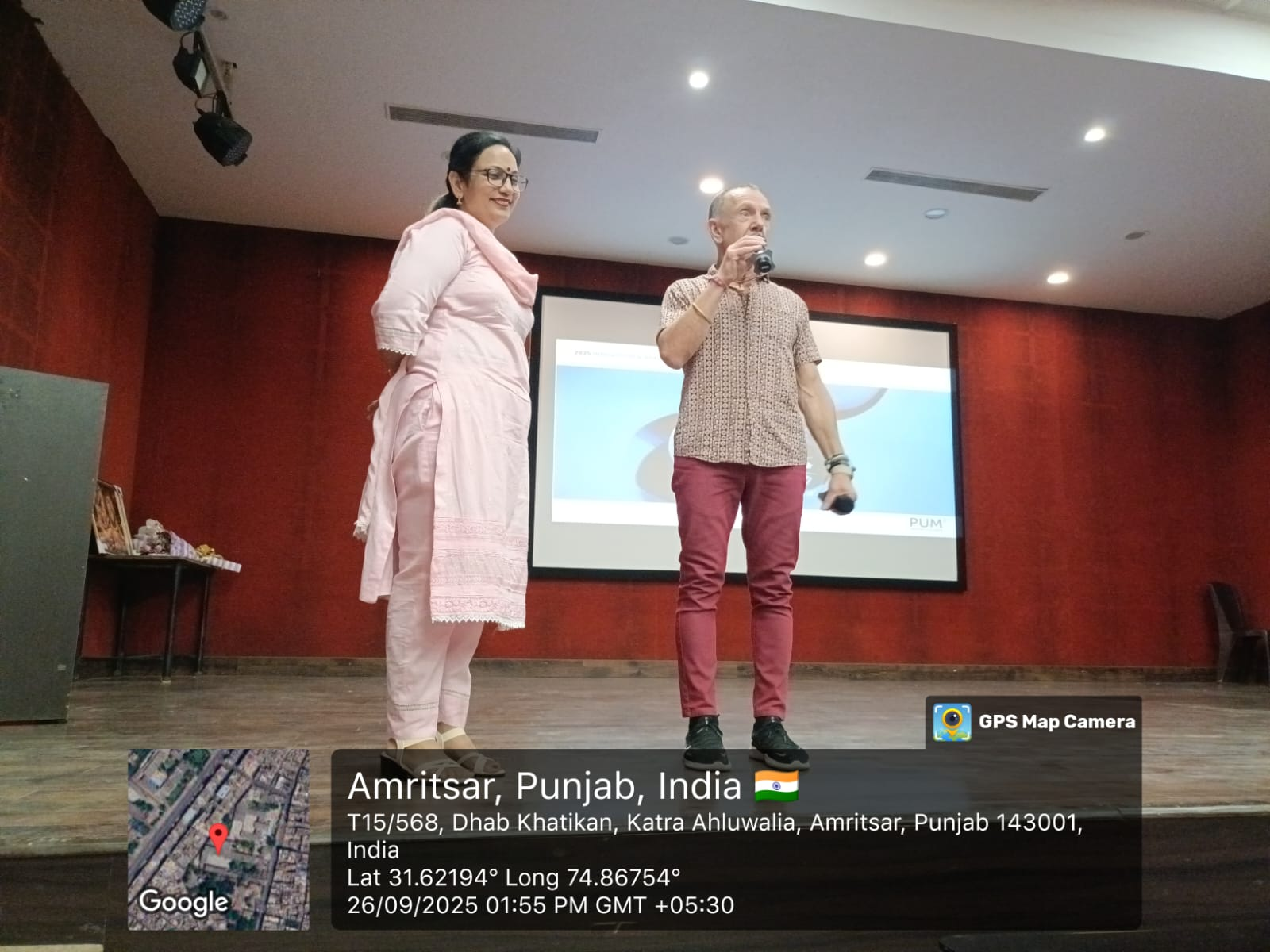
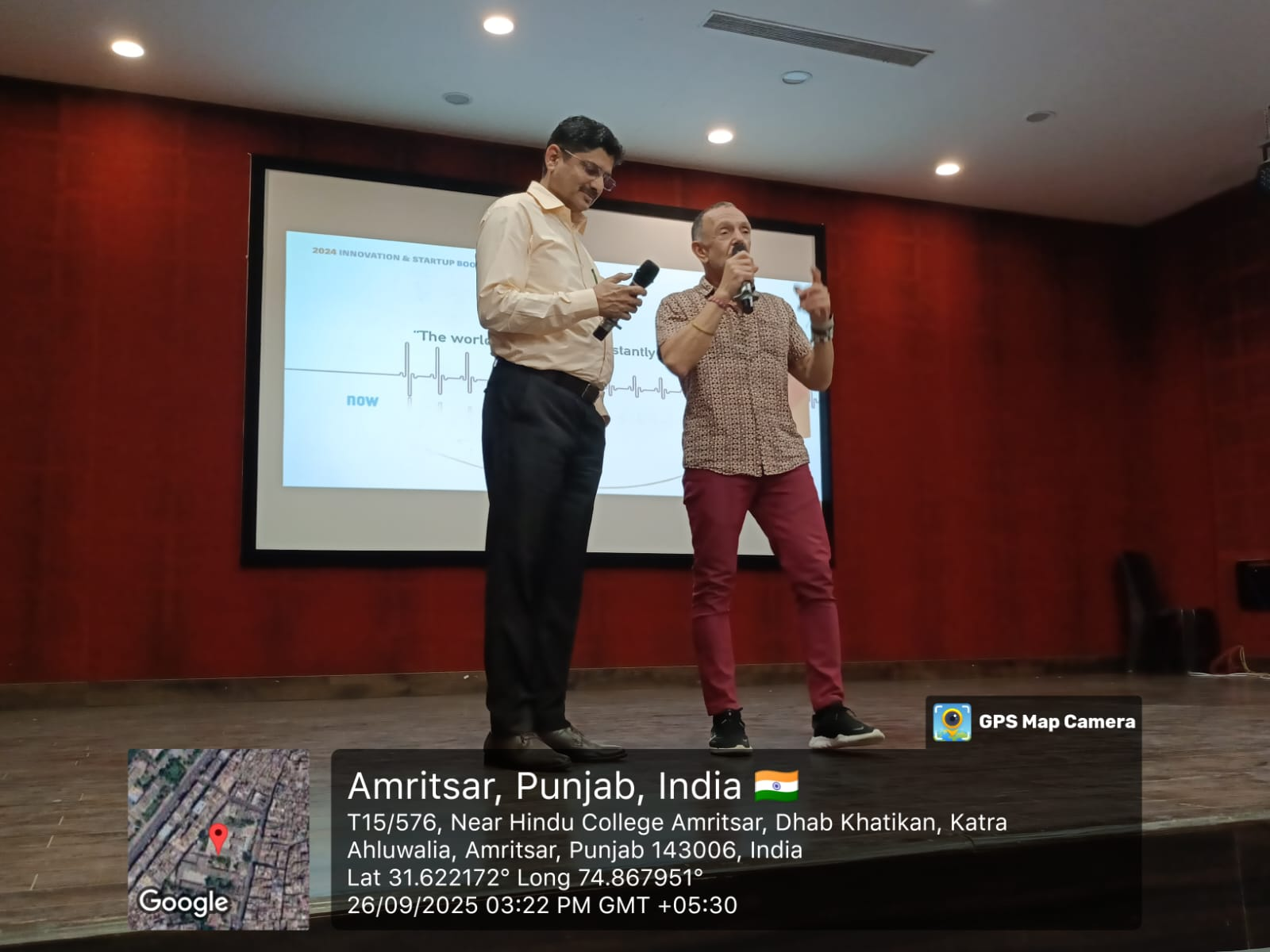
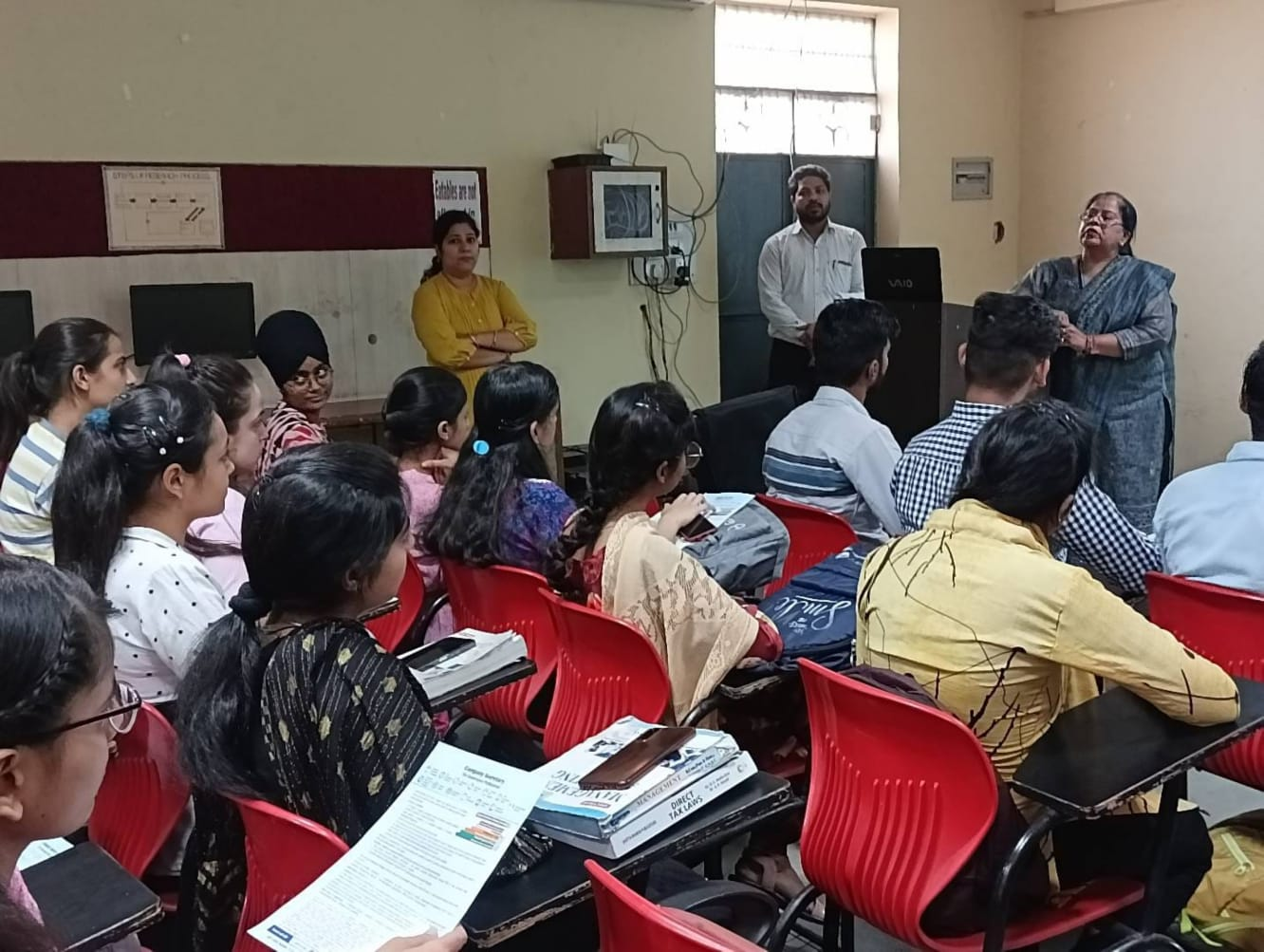
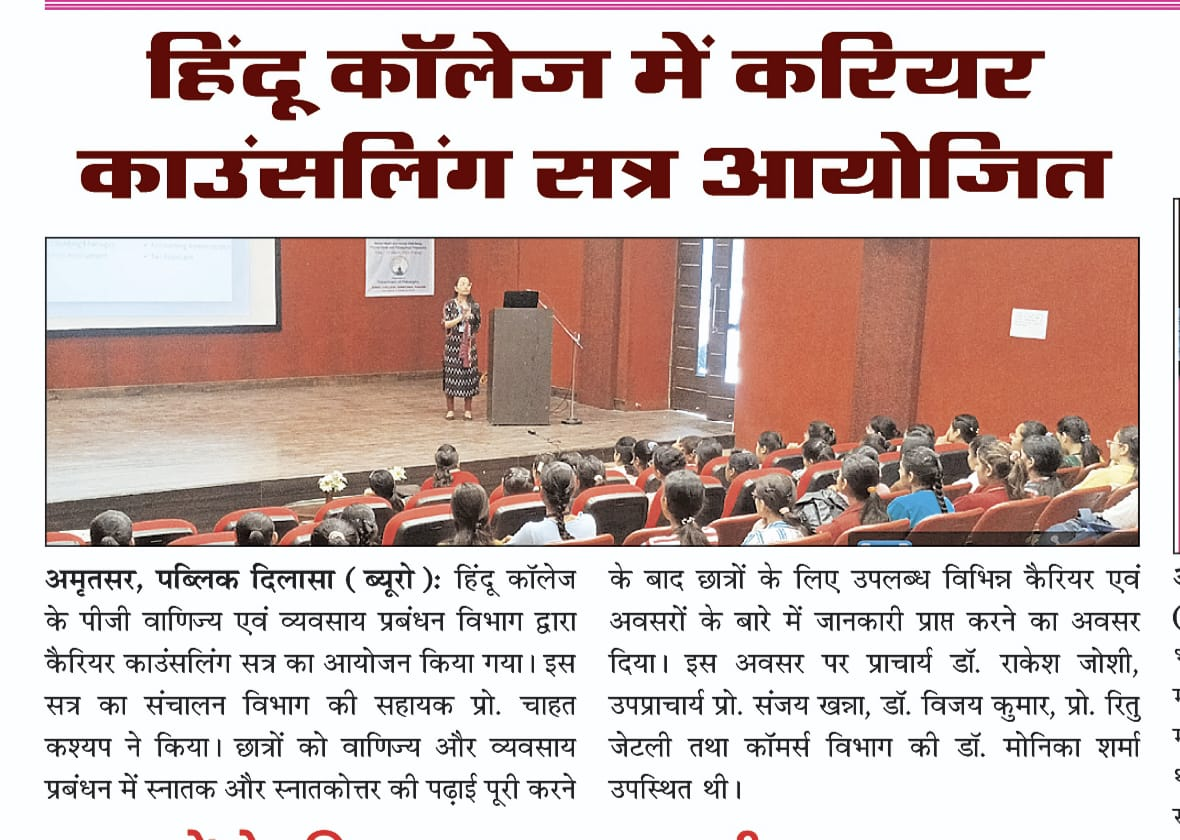
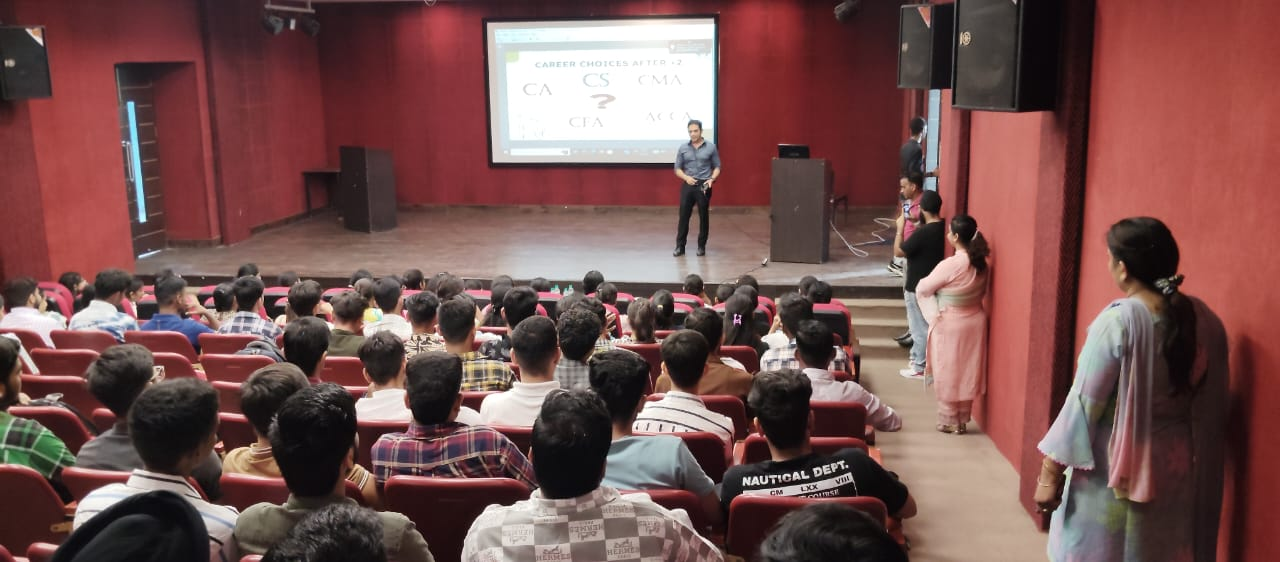
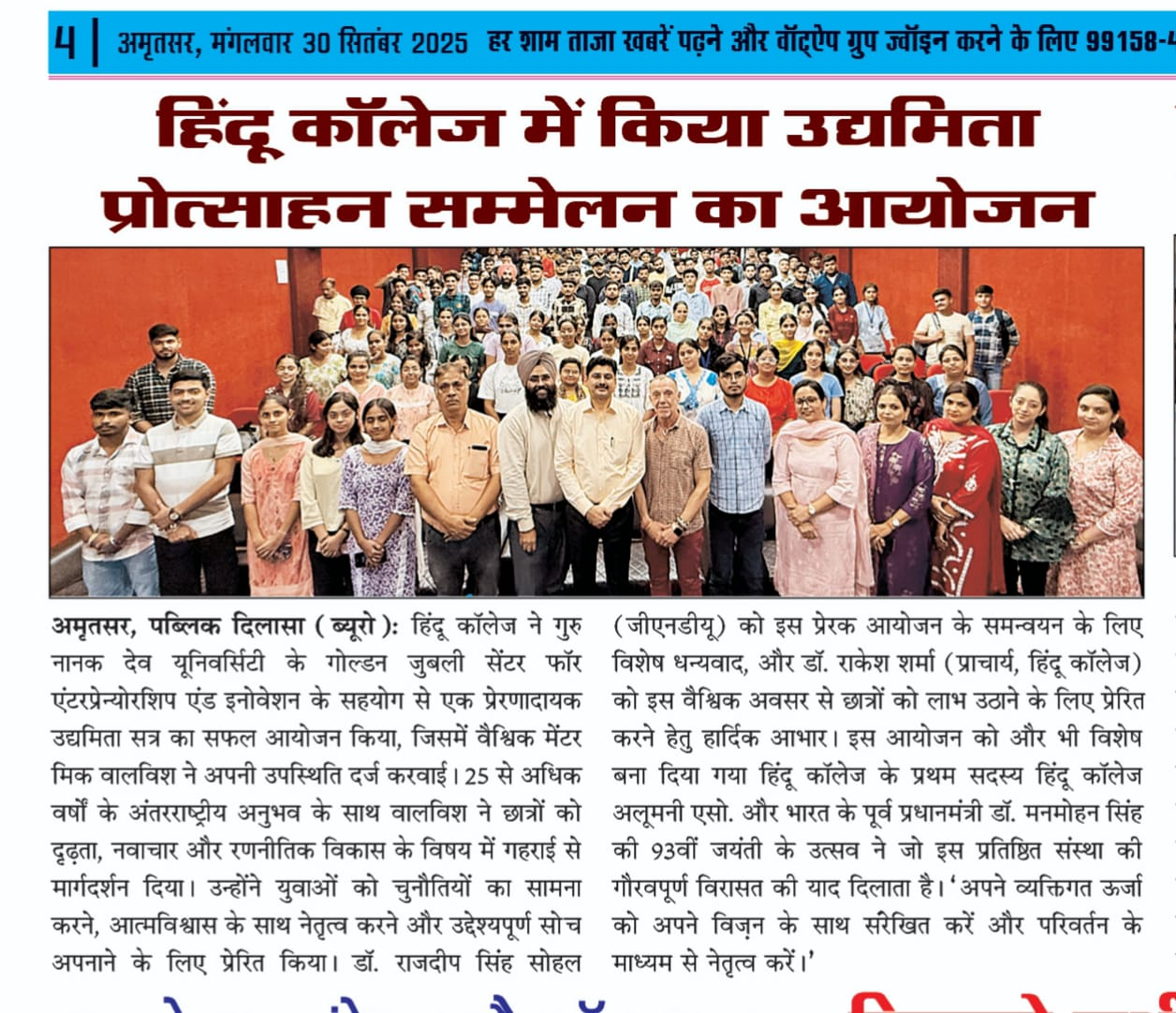
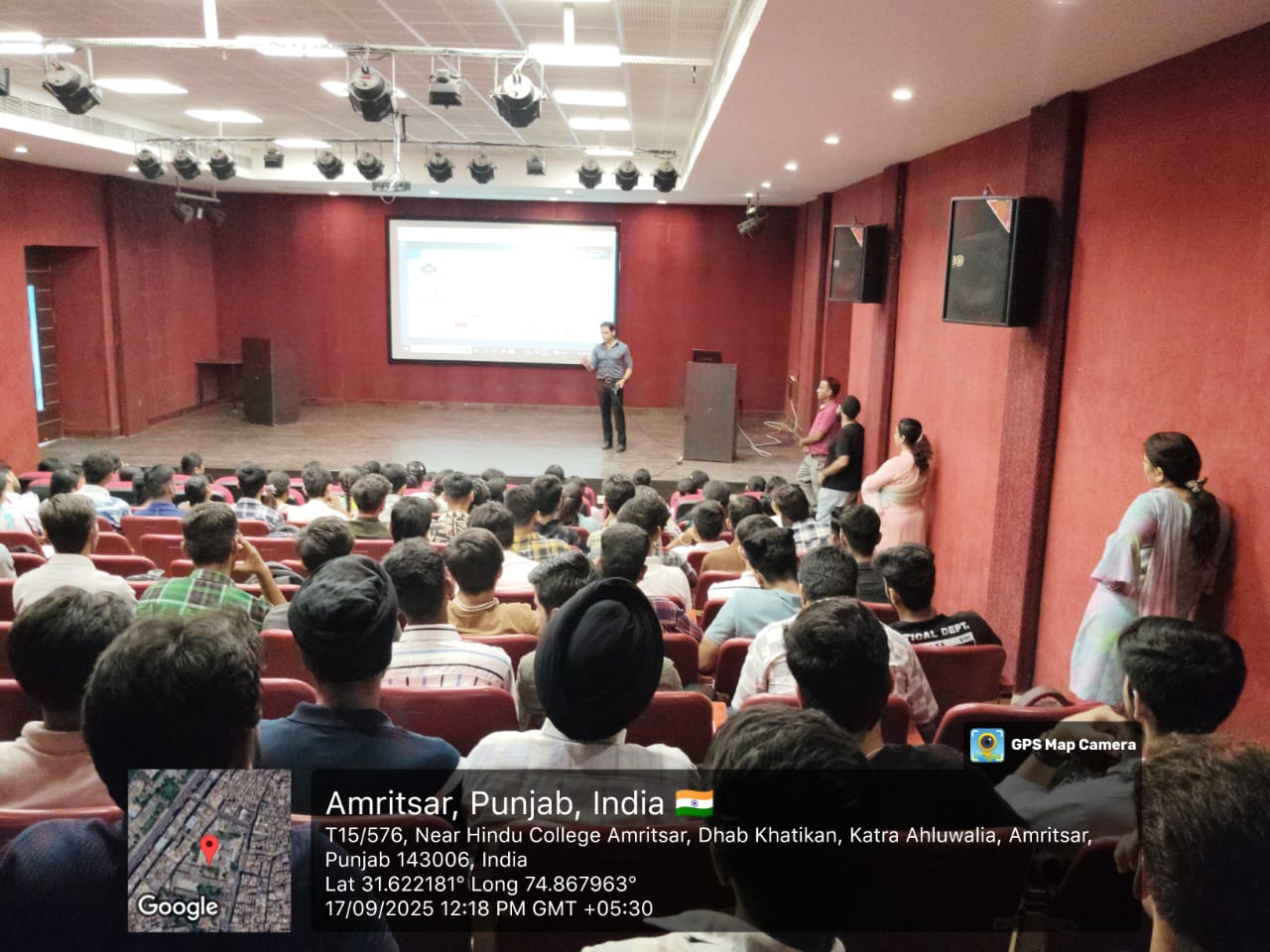
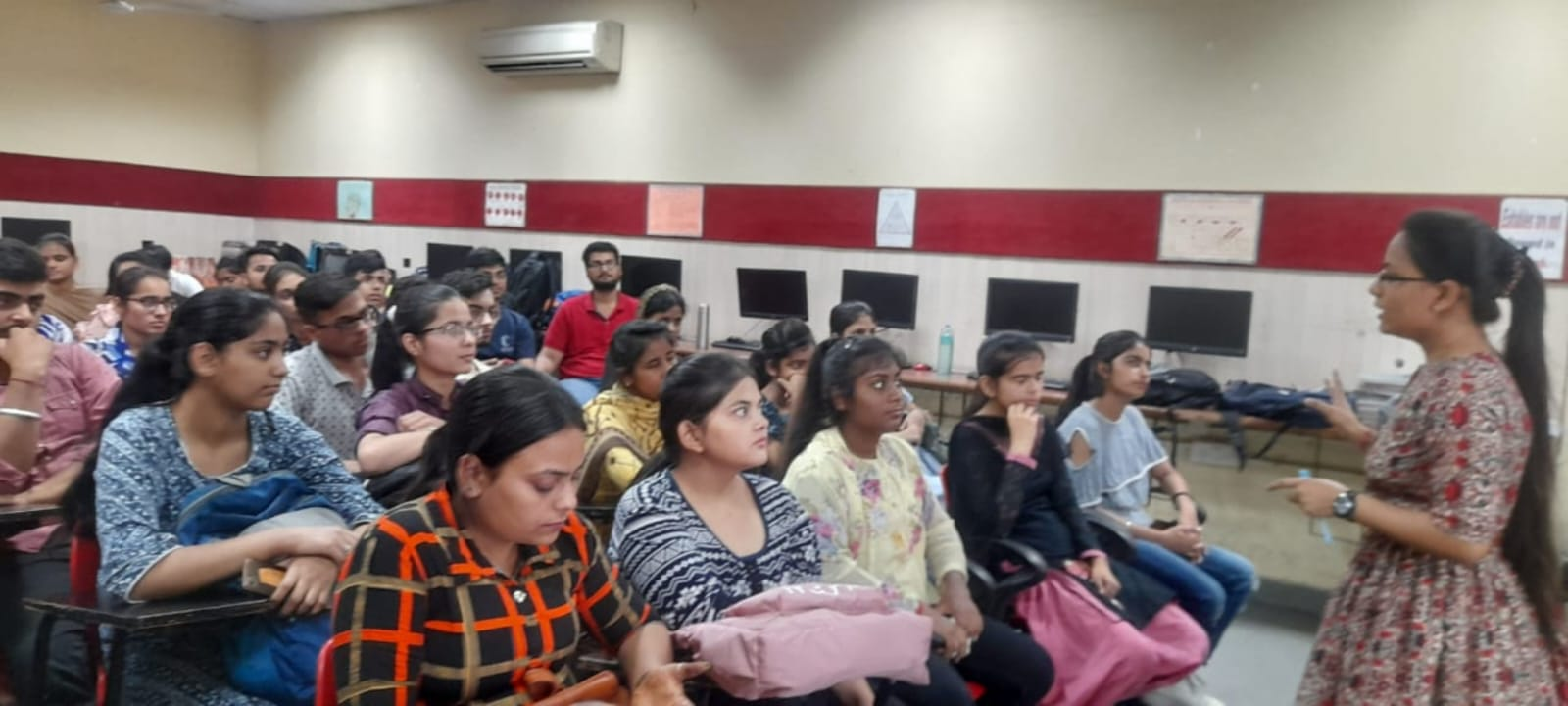
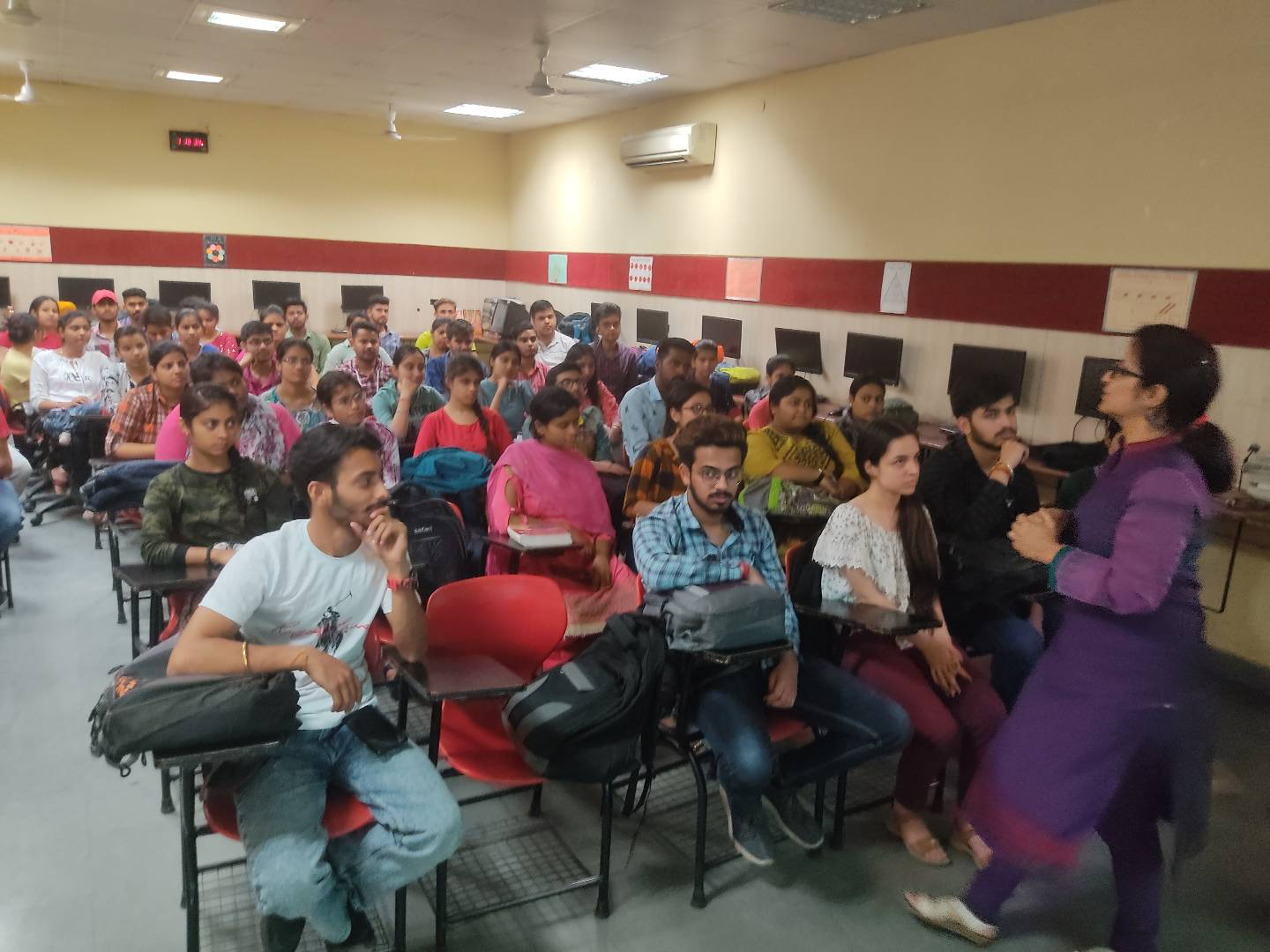
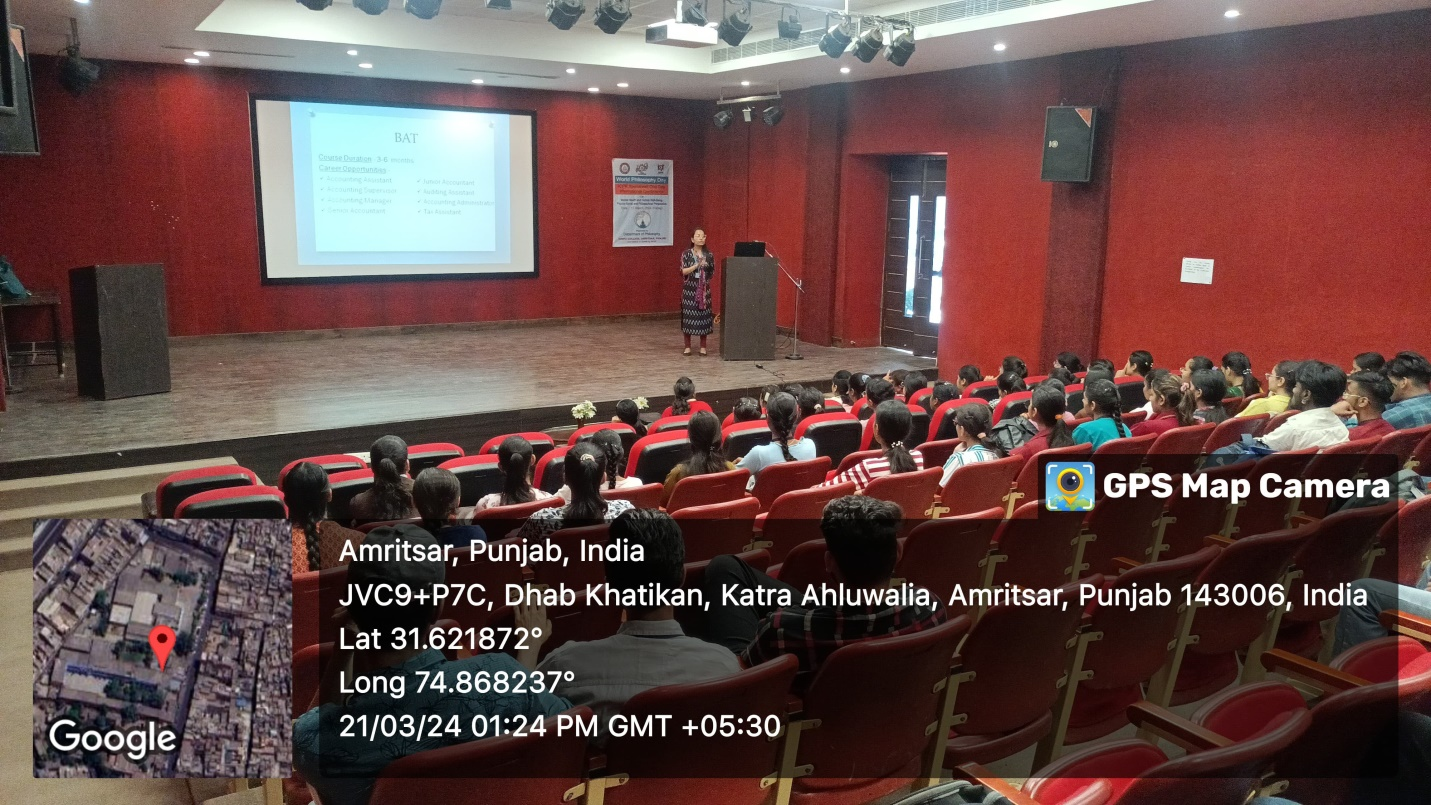
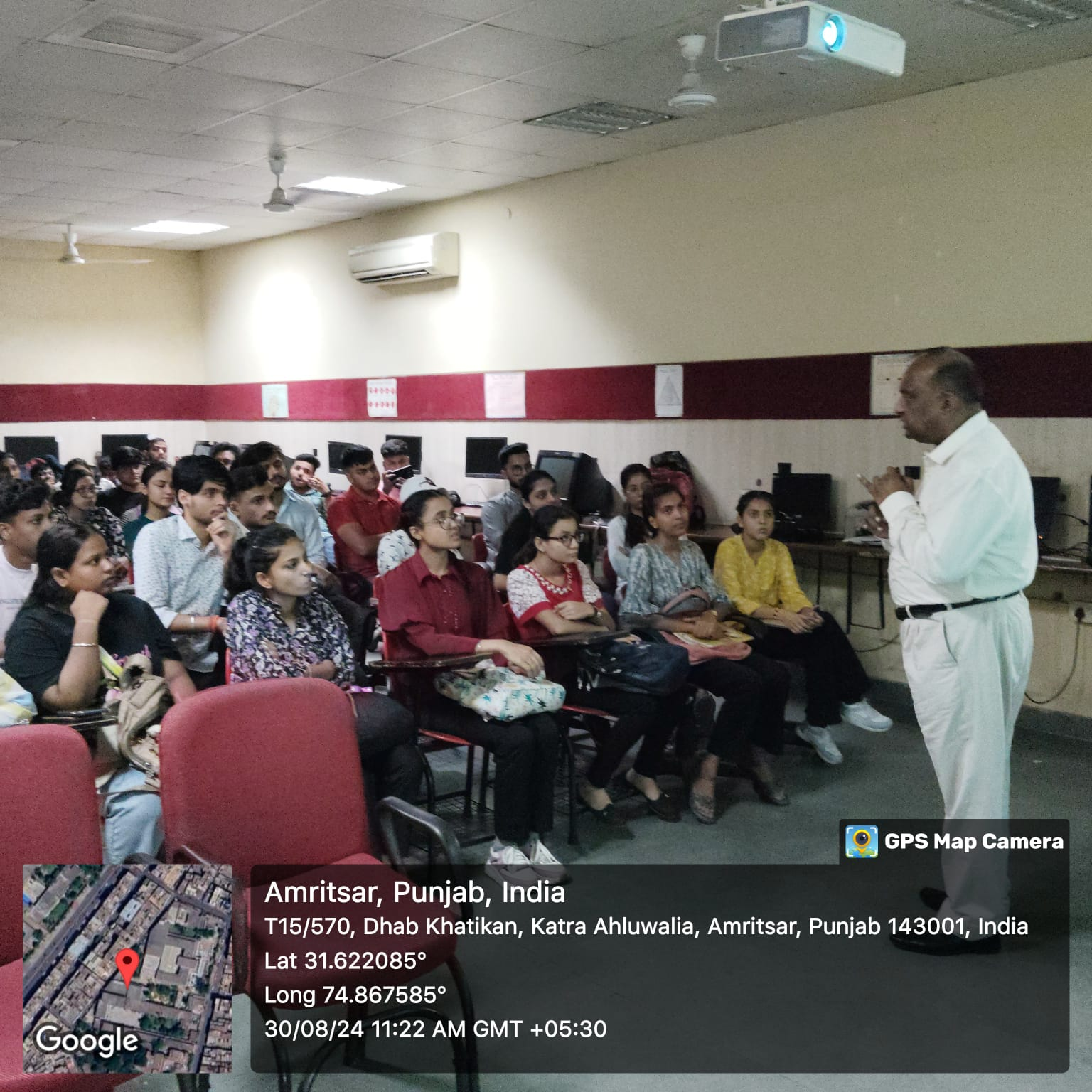
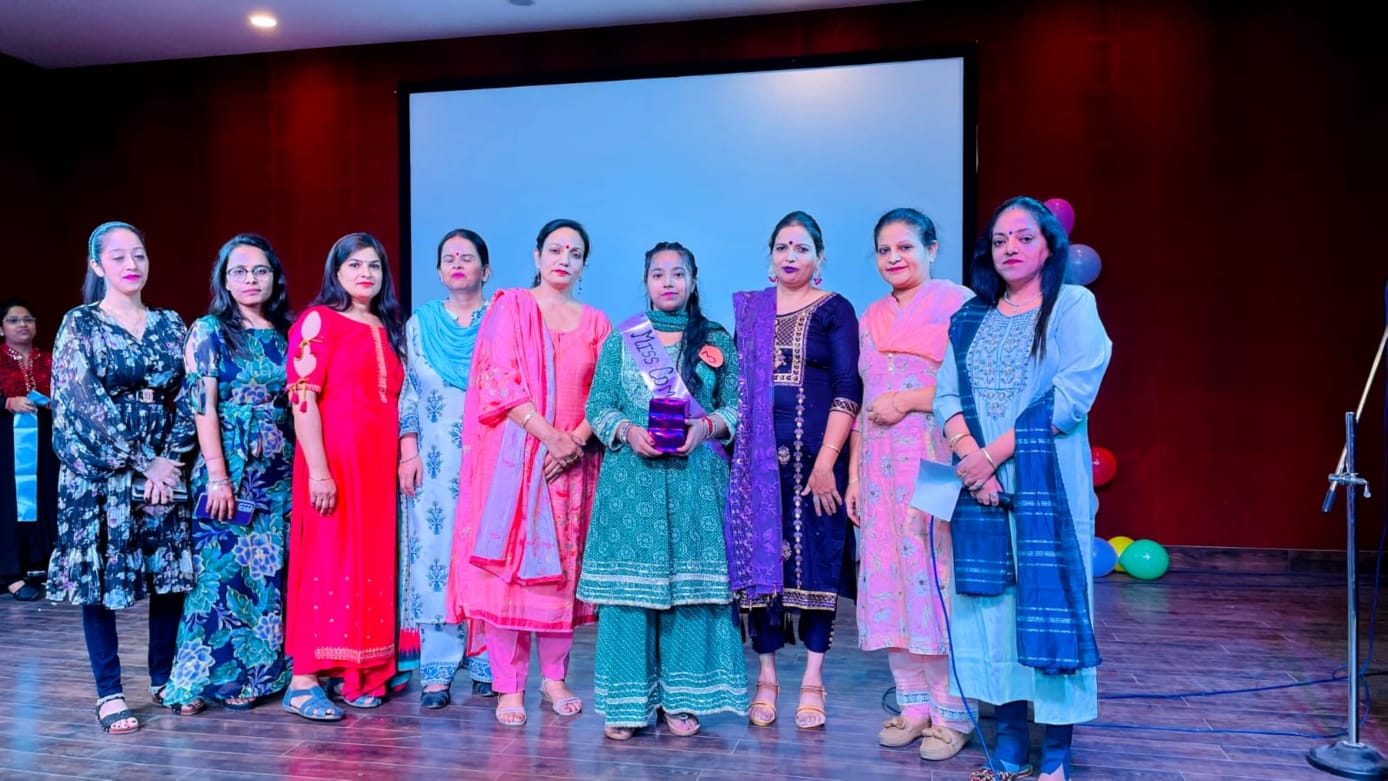
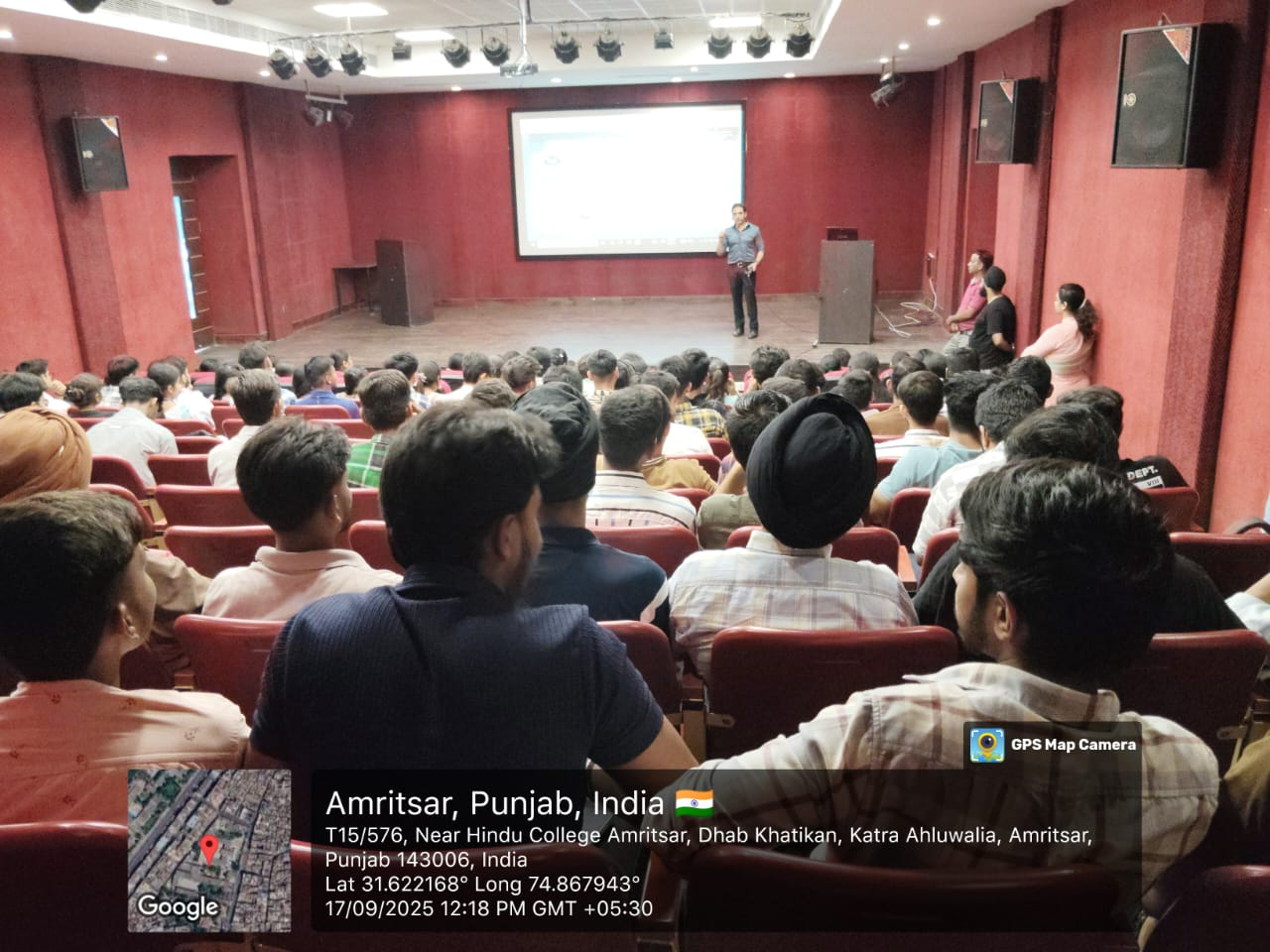
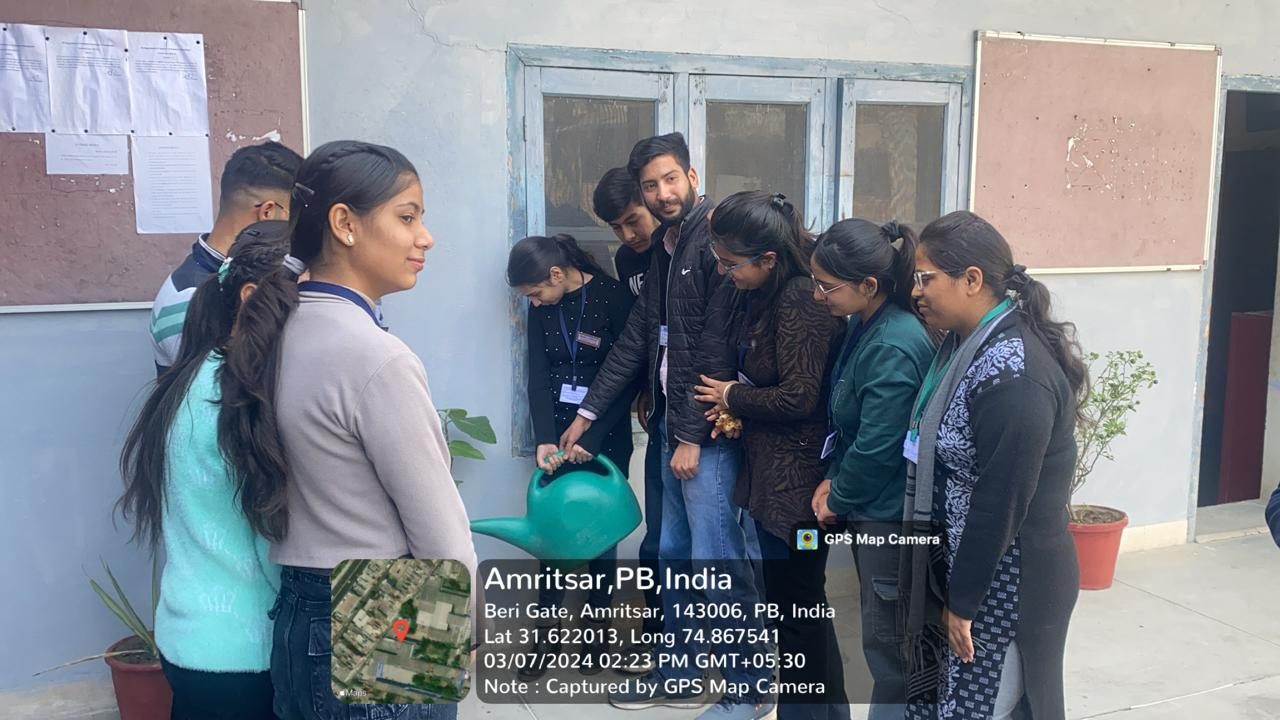
- 1. Activity of Computer Science & Multimedia Department
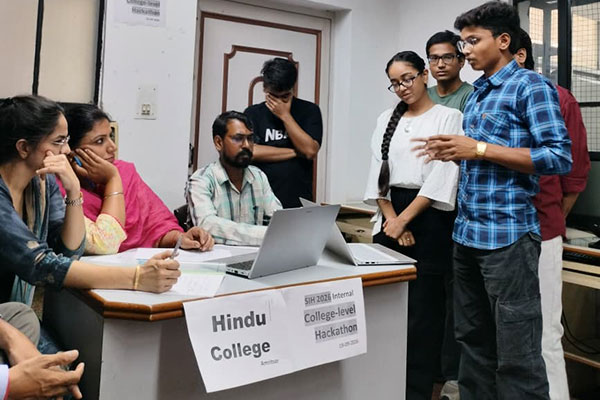
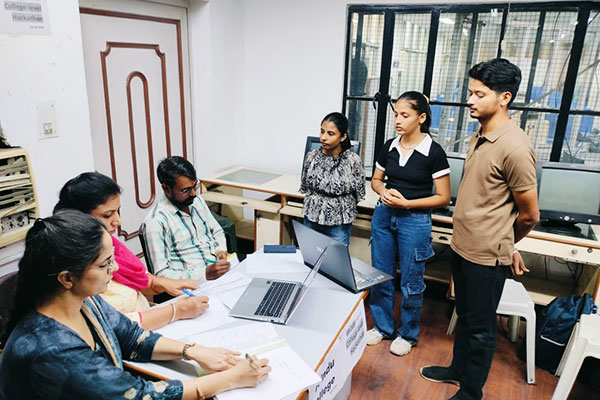
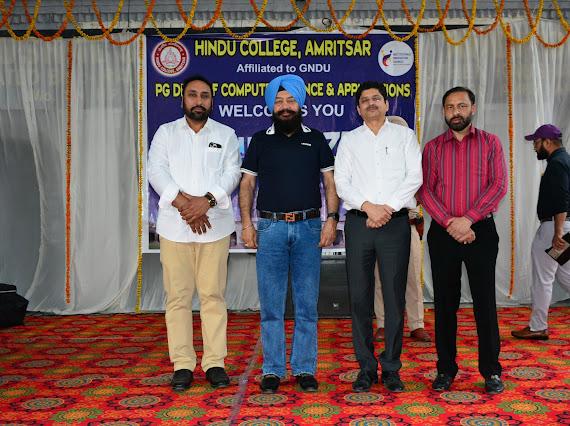
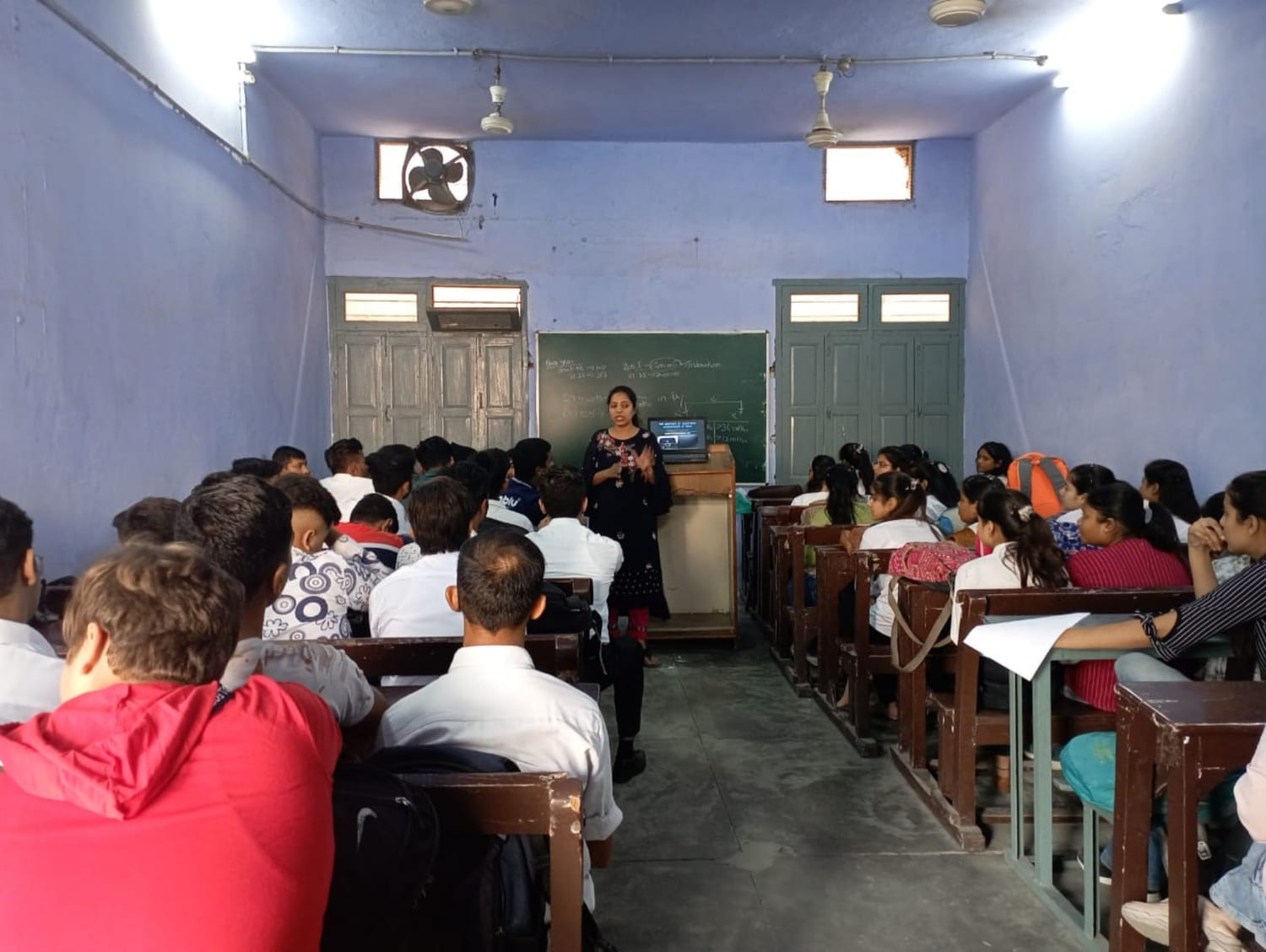
- 2. Hindu College, Amritsar Organizes Internal Hackathon Under Smart India Hackathon 2026
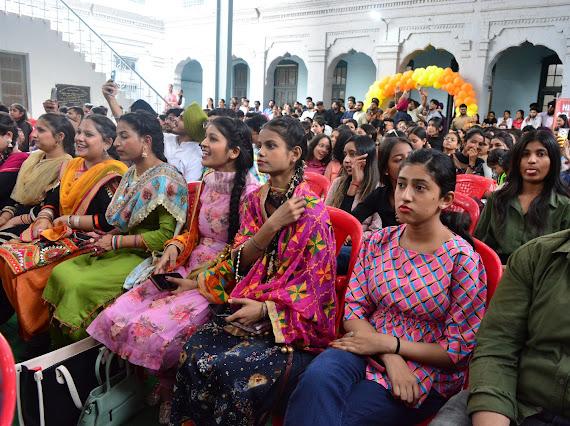
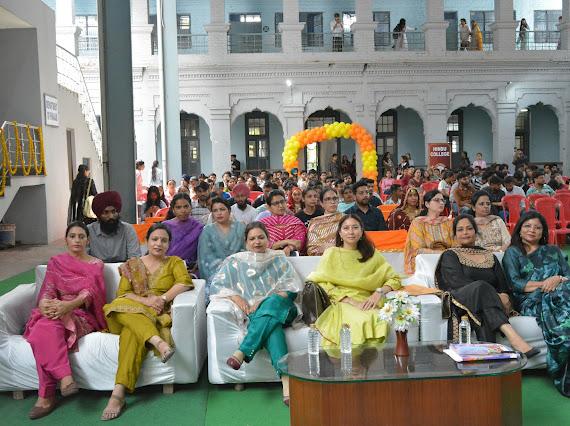
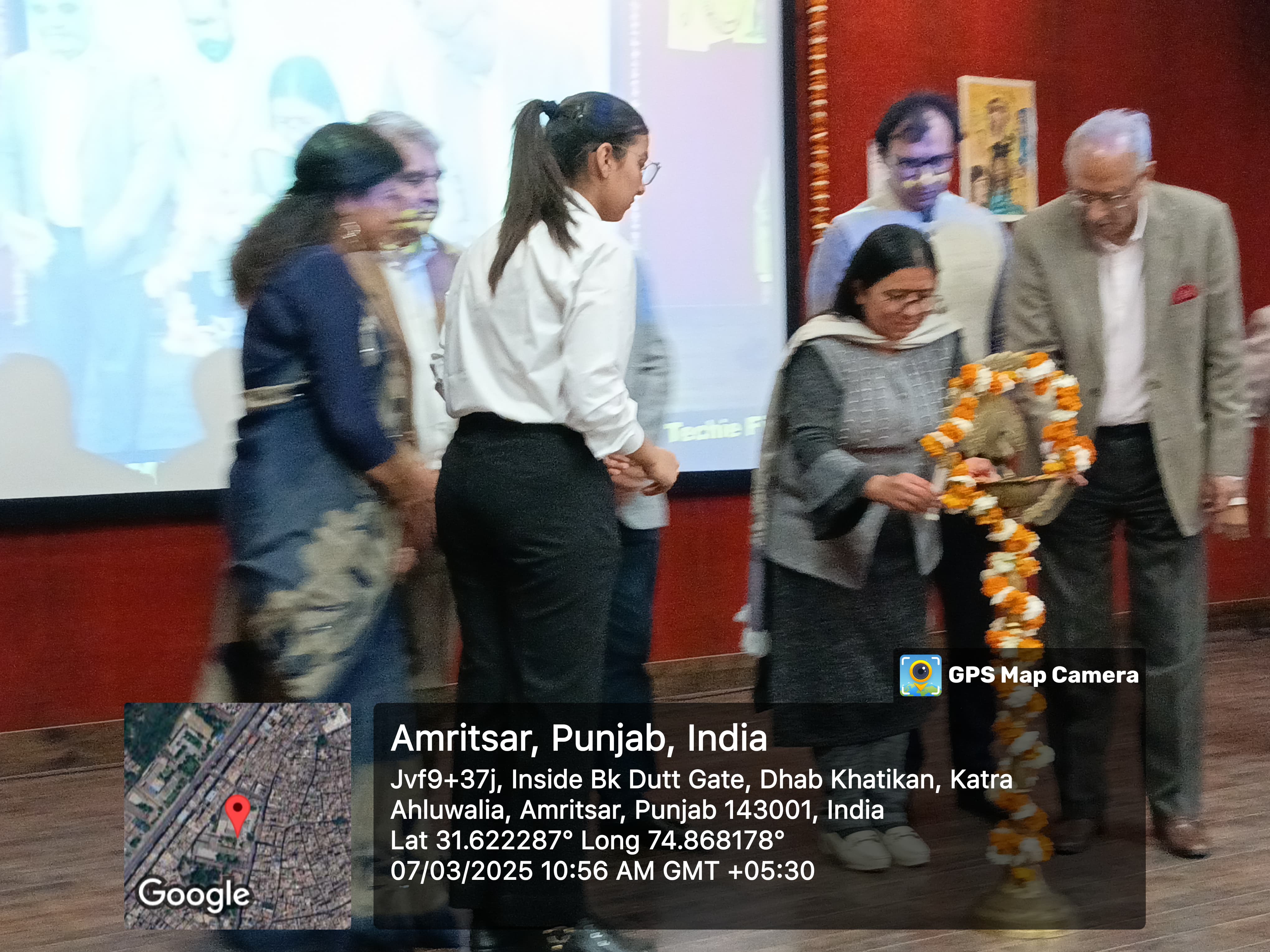
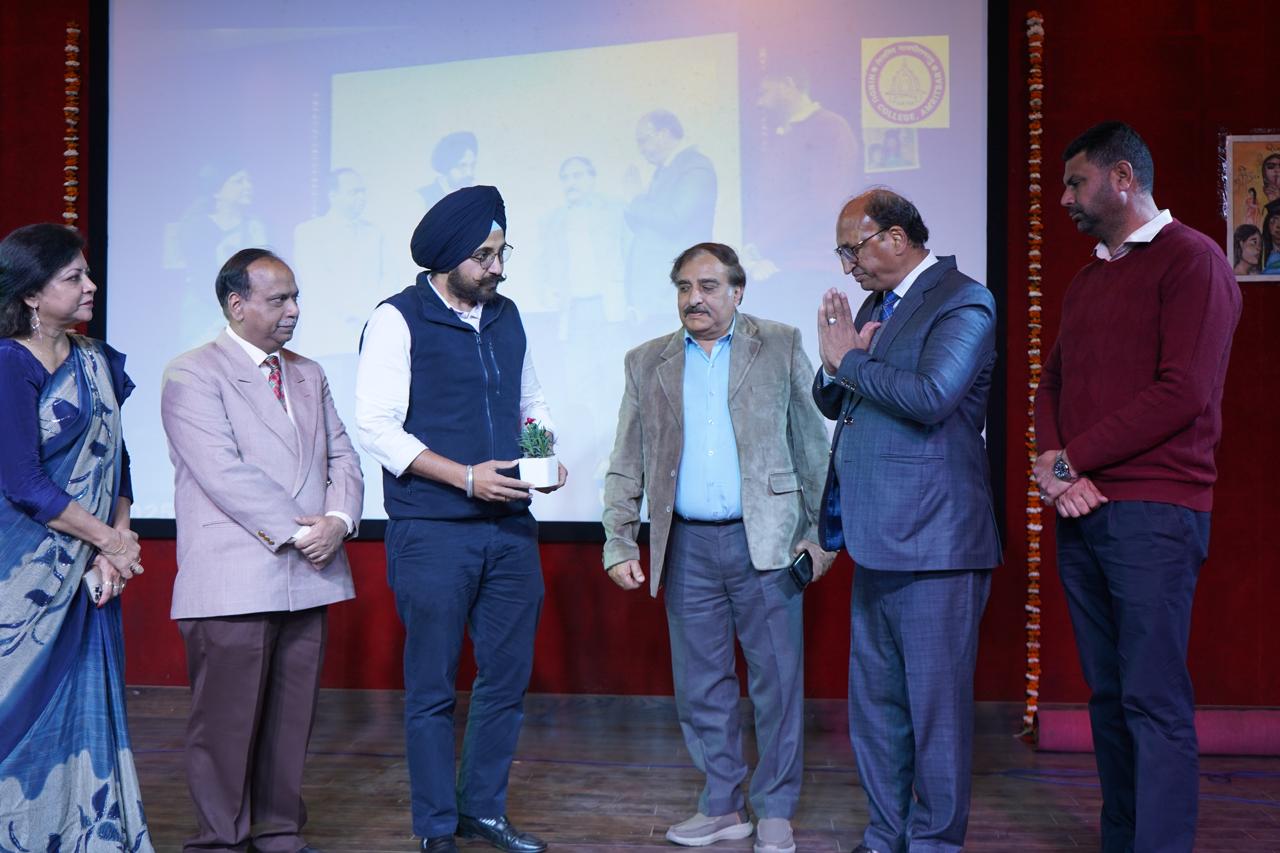
*Amritsar, September 19, 2026:* Hindu College, Amritsar, organized an Internal Hackathon on *September 19, 2026, in the **Computer Science Department Lab, in accordance with the guidelines and conditions laid down for the **Smart India Hackathon (SIH) 2026*. The event provided students with an opportunity to identify real-world challenges and present innovative technology-based solutions to the problem statements specified under the Smart India Hackathon. Participating teams presented their ideas, proposed solutions, working concepts, and approaches before a panel of jury members. The participating teams were evaluated on various parameters, including *understanding of the problem statement, innovation and originality of the idea, feasibility and effectiveness of the proposed solution, presentation and communication skills, technical approach, and overall impact of the proposed solution*. Following the presentations and evaluation, the jury announced the results of the internal hackathon. The jury panel comprised *Dr. Manpreet, Dr. Krishan, * and Dr. Rachna,** who assessed the participating teams and provided valuable feedback to the students on their ideas and proposed solutions. The hackathon was organized under the supervision of *Mr. Anshuman Sharma, SPOC (Single Point of Contact) for Smart India Hackathon, with the guidance and supervision of **Dr. Rama Sharma, HOD, PG Department of Computer Science*. *Dr. Rakesh Kumar, Principal, Hindu College, Amritsar*, appreciated the efforts of the students and faculty involved in organizing the event. He motivated the students to actively participate in hackathons and other such innovation-driven activities, highlighting their importance in developing problem-solving, teamwork, presentation, and technical skills that can prove valuable in their future academic and professional careers. The Principal further encouraged students to make such opportunities a regular part of their learning journey and emphasized that the *Smart India Hackathon is conducted annually*, providing students with a platform to work on real-world problem statements and showcase their innovative solutions. He also encouraged the present participants to take the role of mentors and guide other students in future editions of such competitions. The event concluded with appreciation for the participating students, jury members, faculty coordinators, and all those involved in making the internal hackathon a successful platform for innovation and technical learning.

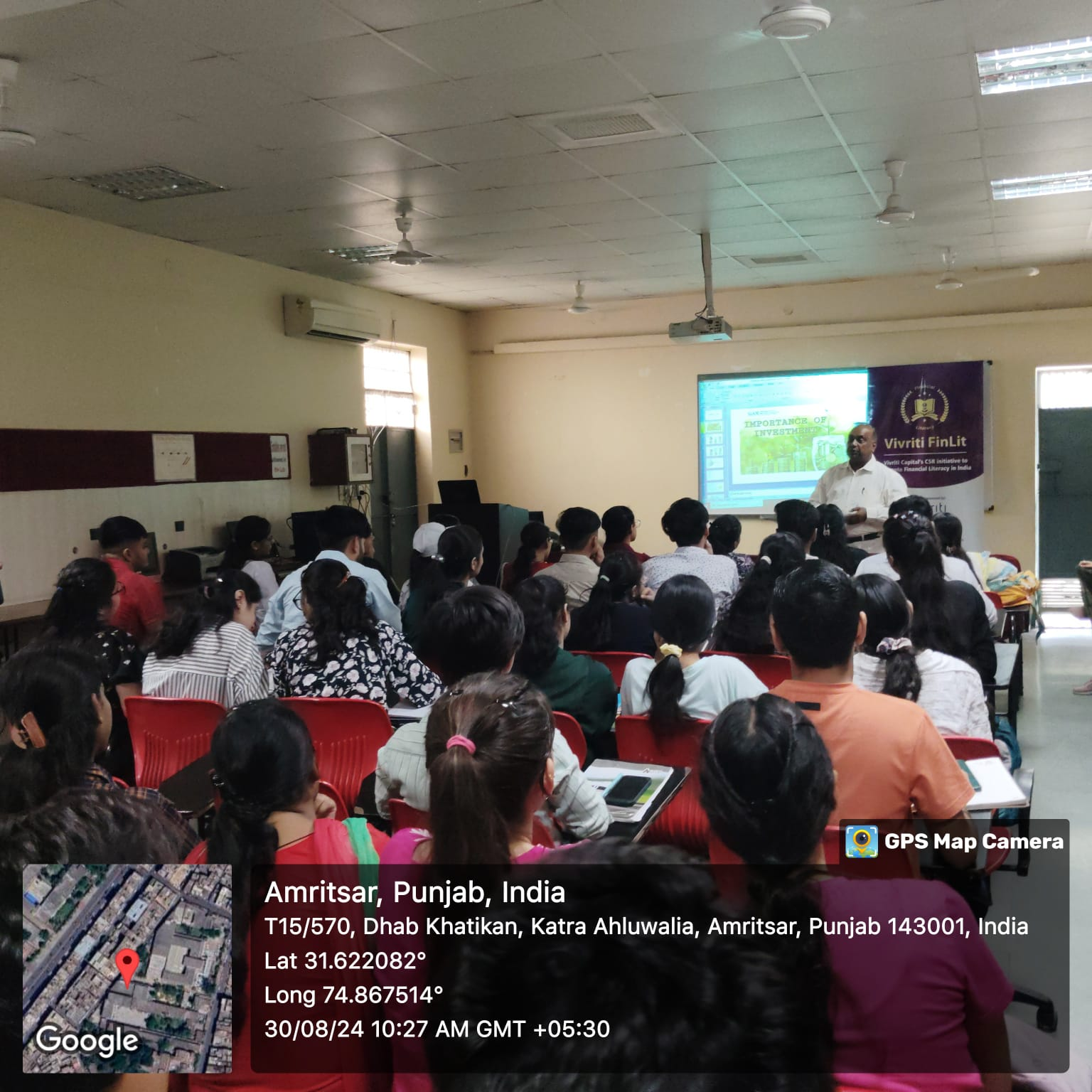
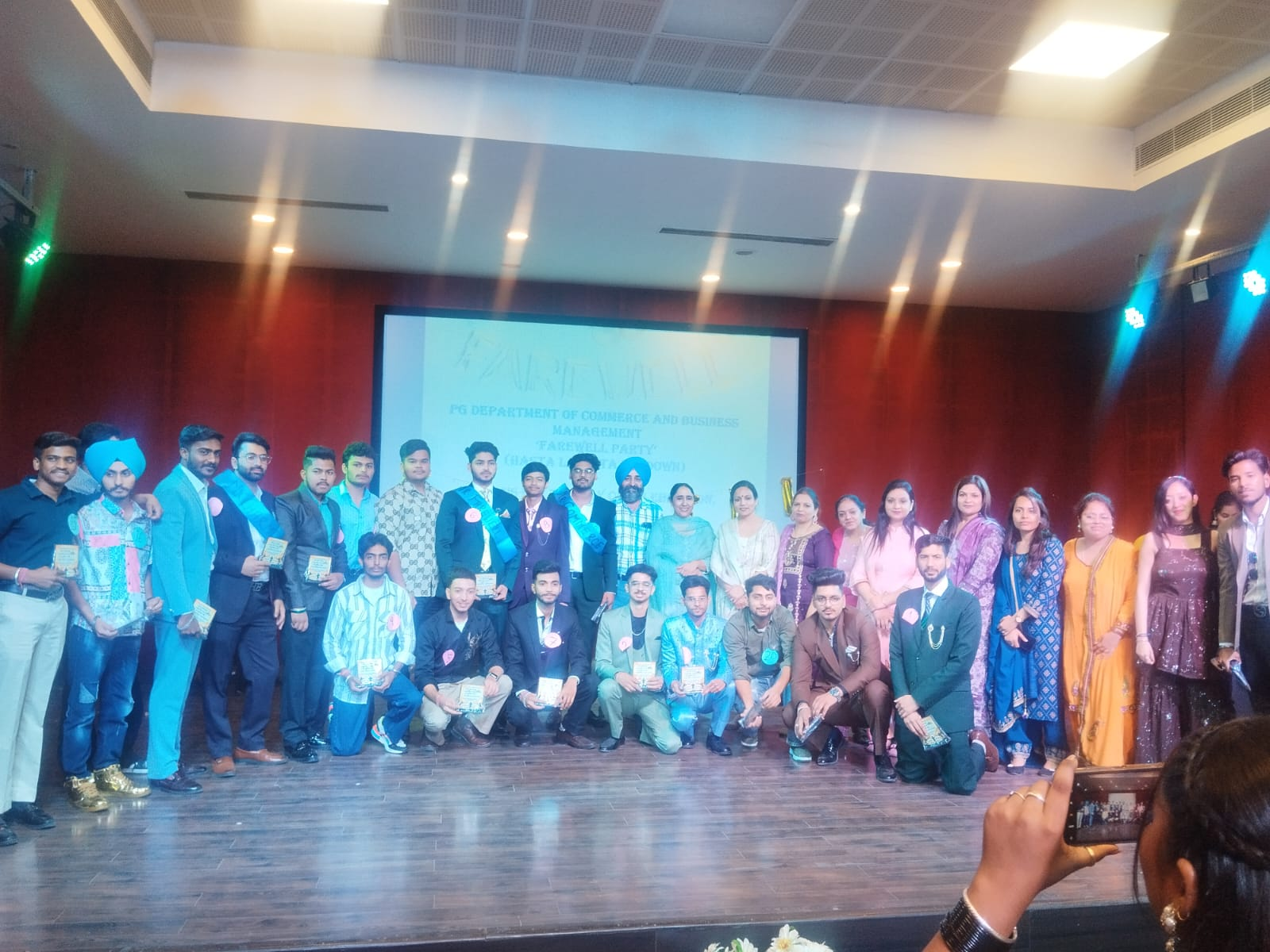
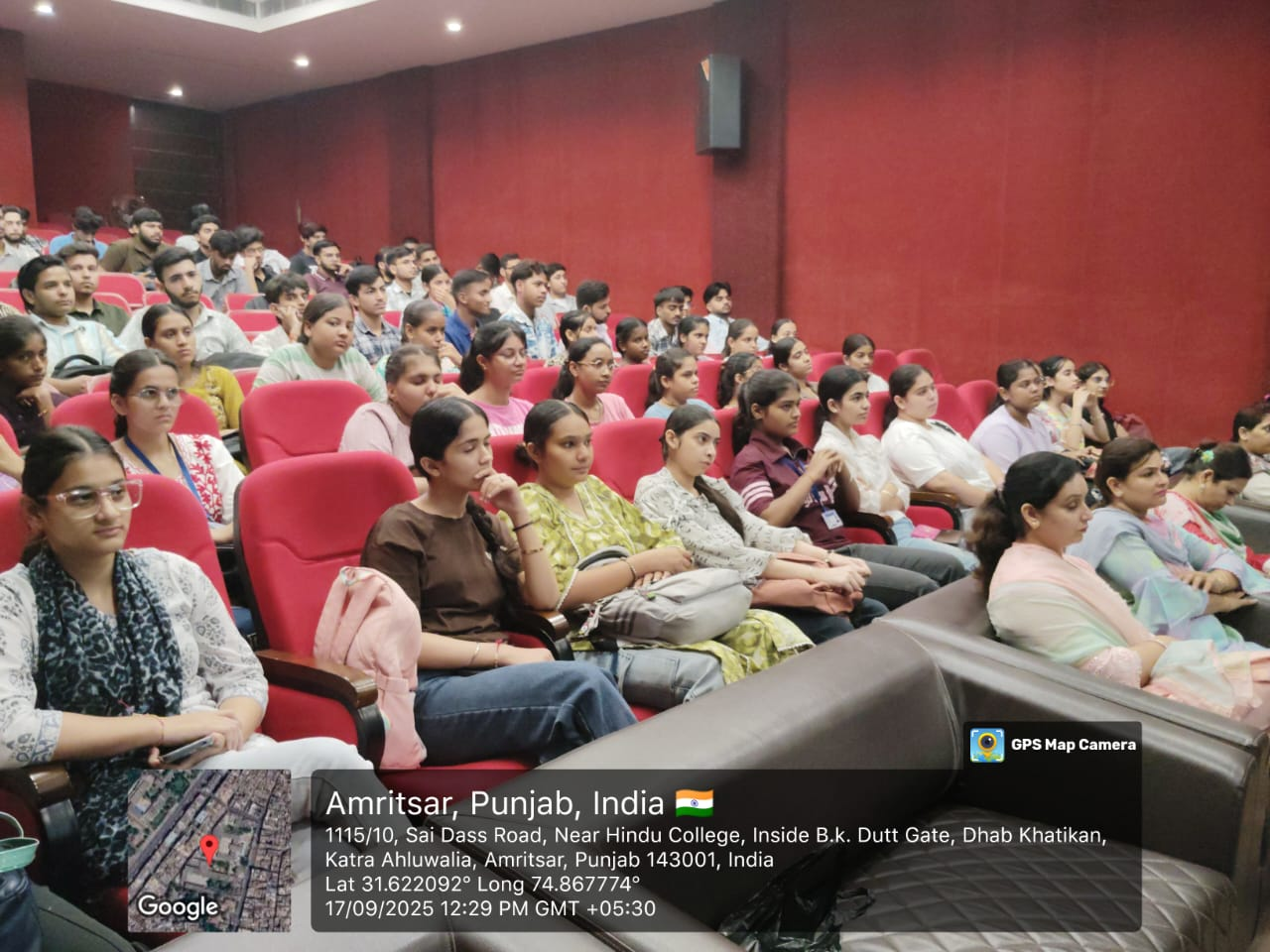
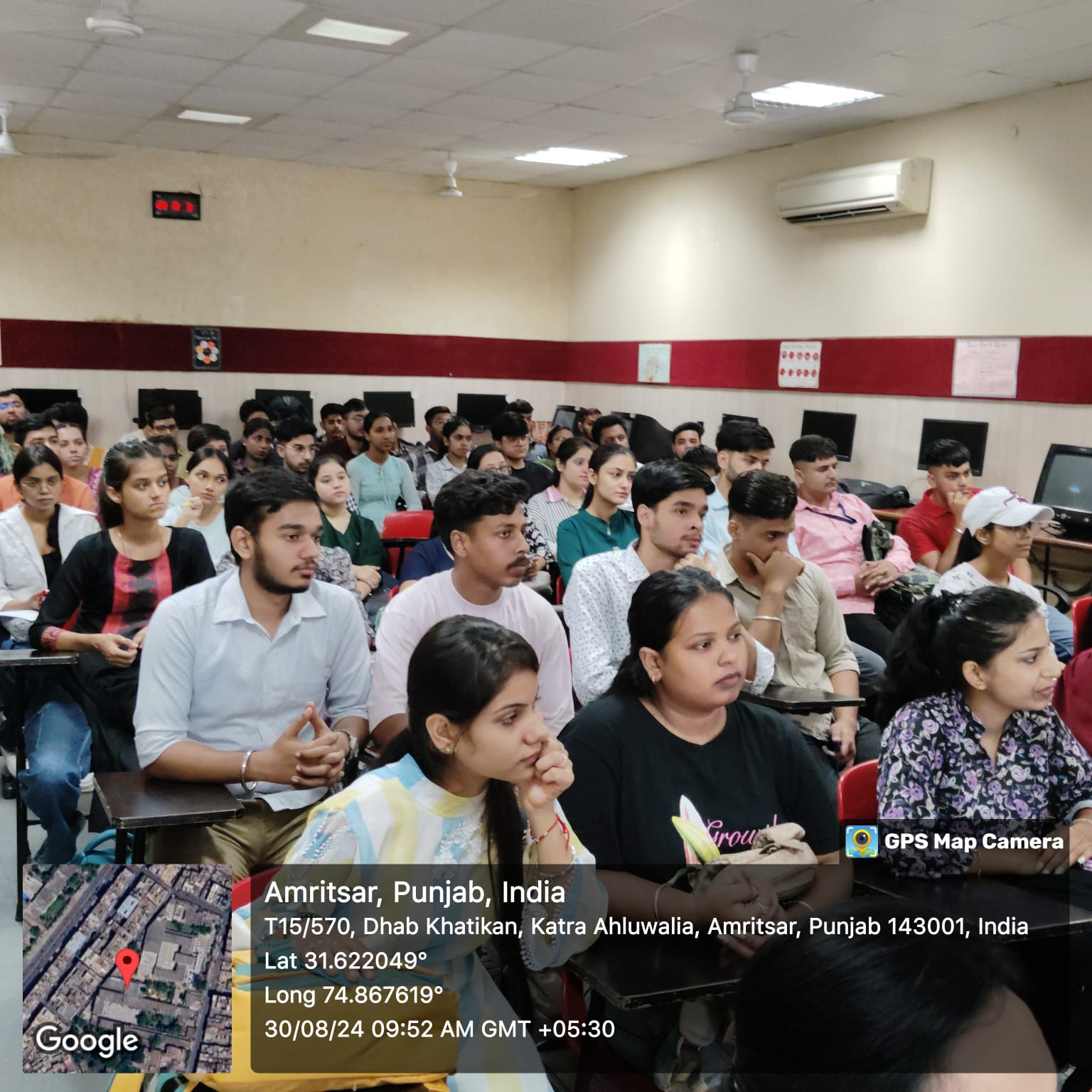


Gallery.
Gallery.
- Currently no Activity
Gallery.
- Currently no Activity
Gallery.
Gallery.
The PG Department of Economics
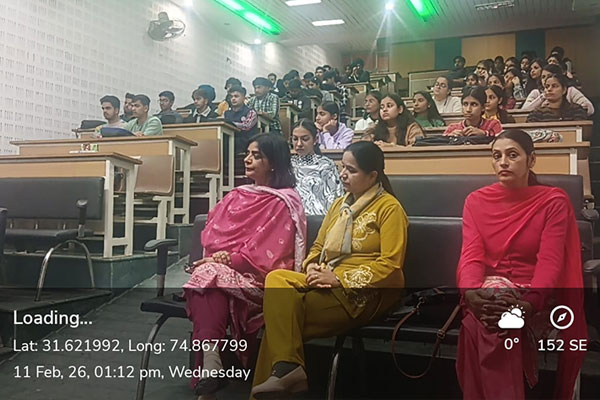
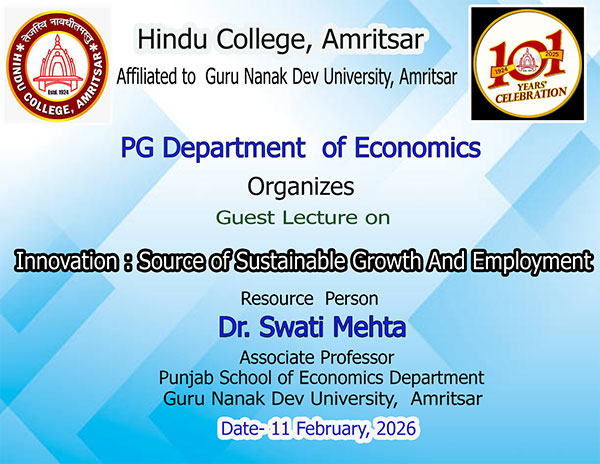
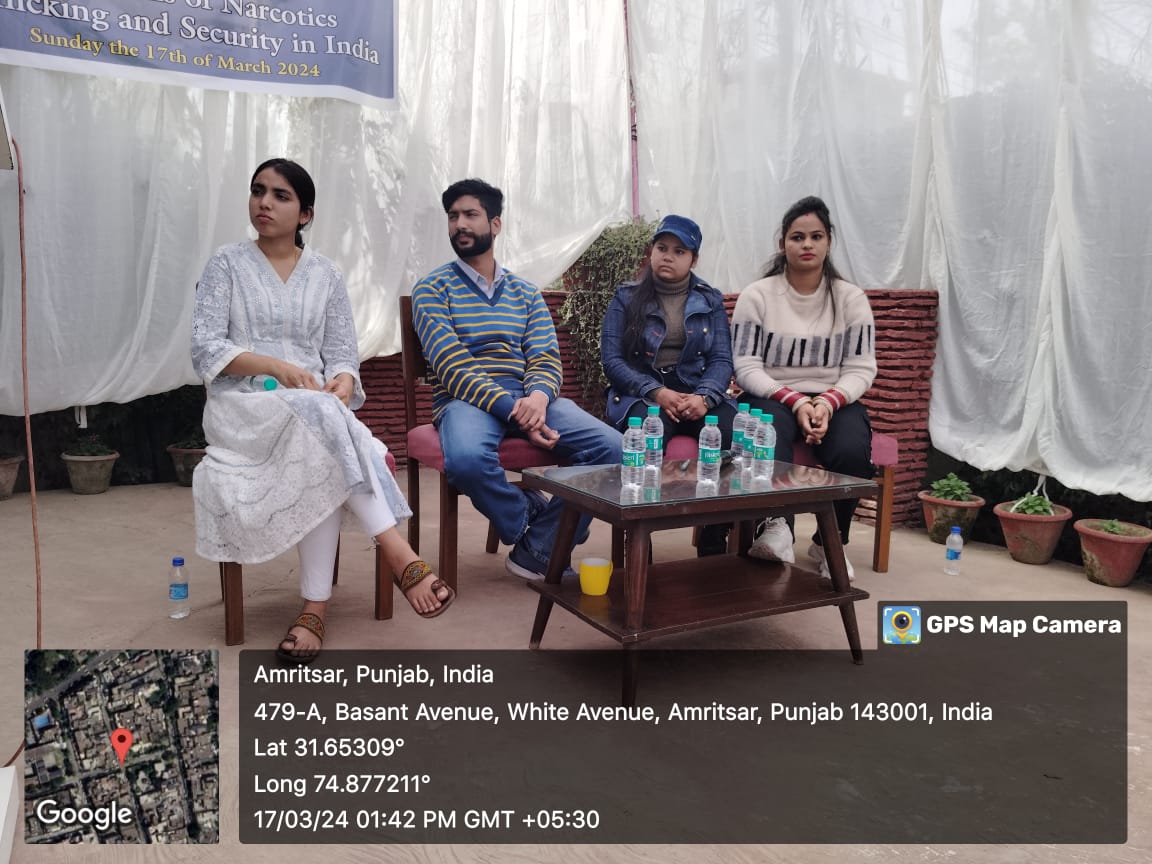
1.The PG Department of Economics organized a guest lecture on “Innovation: Source of Sustainable Growth and Employment.” The lecture was delivered by Dr. Swati Mehta, Associate Professor, Punjab School of Economics,Guru Nanak Dev University. The Honourable Principal welcomed the resource person and appreciated the initiative. Dr. Mehta’s lecture was informative and beneficial for the students. The session concluded with a vote of thanks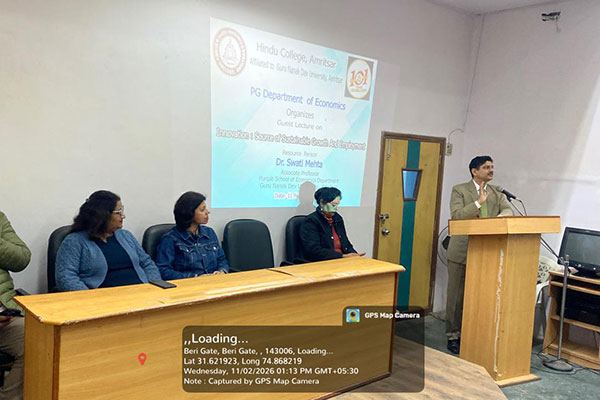
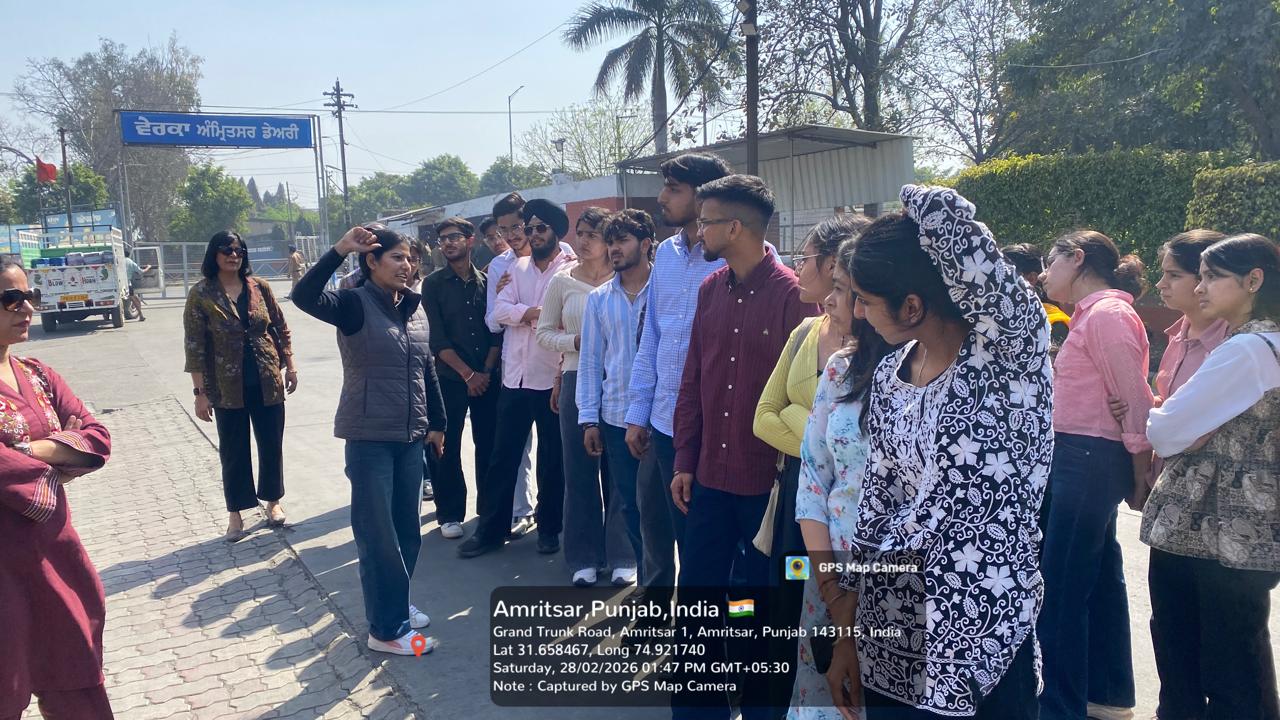
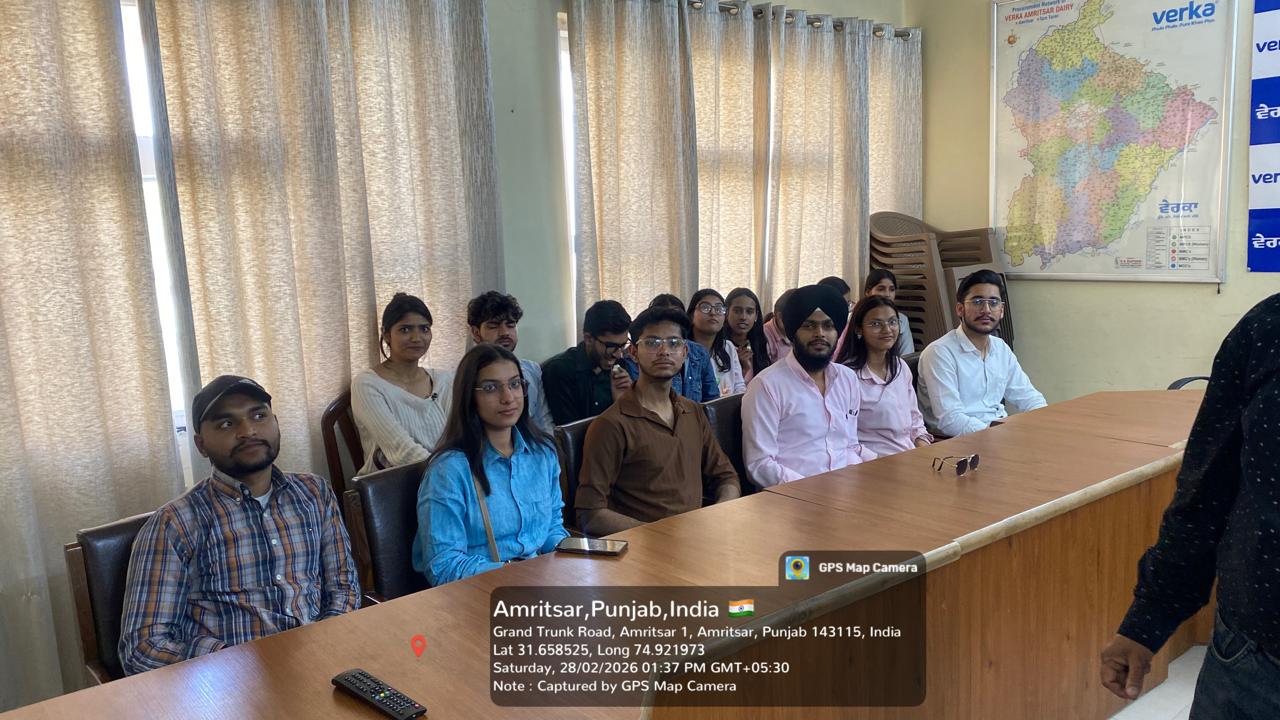
2.The PG Department of Economics organized an industrial visit to Verka Milk Plant, where students observed milk processing, quality testing, and packaging procedures, gaining practical insight into dairy operations. The visit was followed by a tour of Haveli Jandiala, where students experienced traditional Punjabi culture and heritage. The visit was informative and enriching for all.
Gallery.
Gallery.

Gallery.
- Currently no Activity
Gallery.
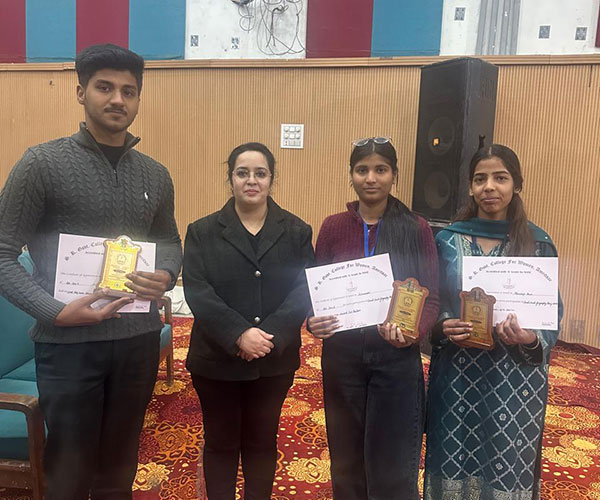
1.I am pleased to inform you that the Hindu College Amritsar team has secured the first position in the Zonal Quiz Competition organized by the Association of Punjab Geographers. Our team outperformed strong contenders, including teams from BBK DAV College, Khalsa College, Khalsa College for Women, SR Government College for Women, GNDU College Verka, and SGAD College, Tarn Taran.
The team will now contend against colleges affiliated with Panjab University and Punjabi University in the next round.
This achievement reflects the dedication and excellence of our students: Mandeep Kaur sem 2, Himanshi Sem 2 and Aayush Bhatia sem 4.
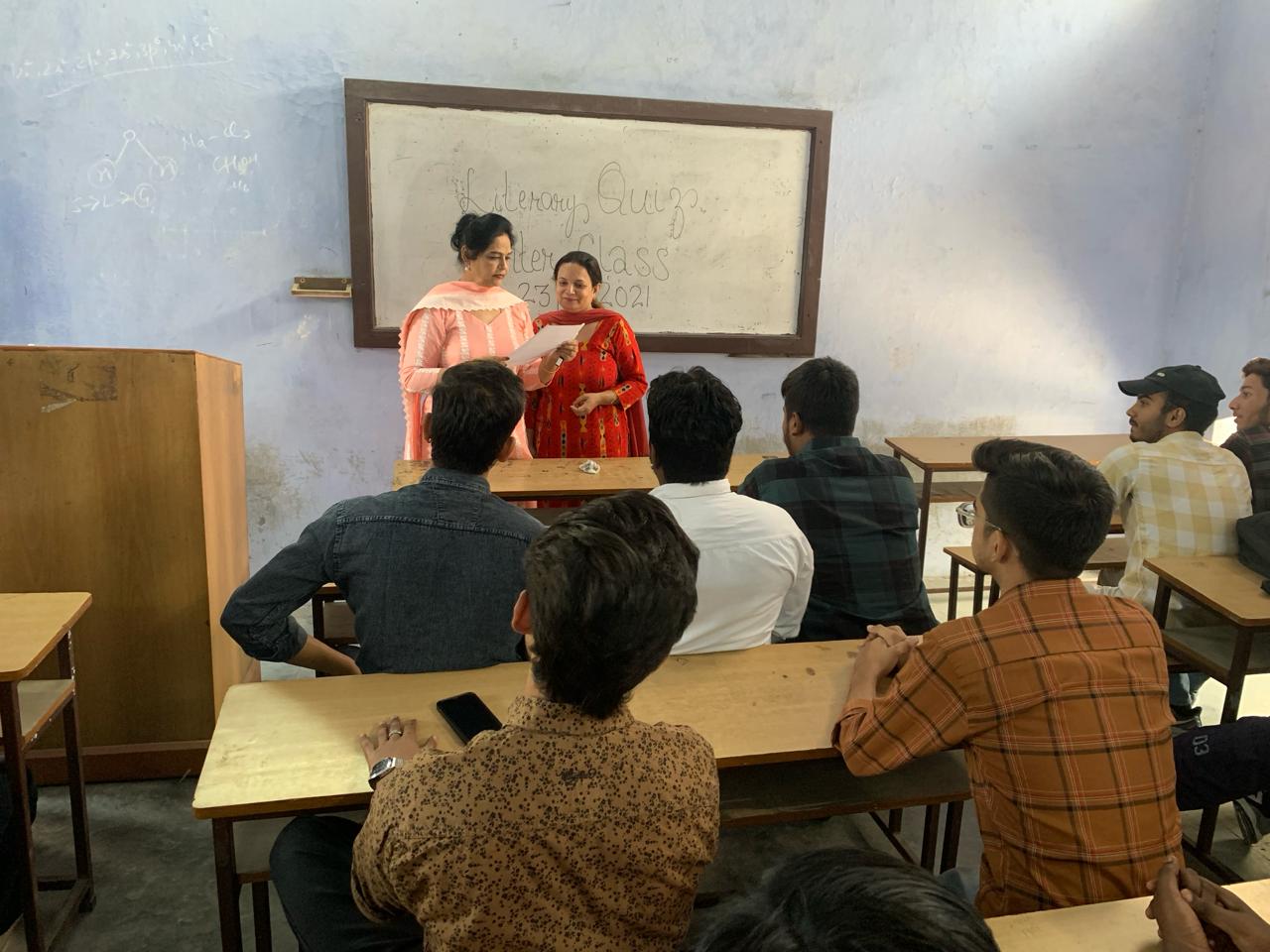
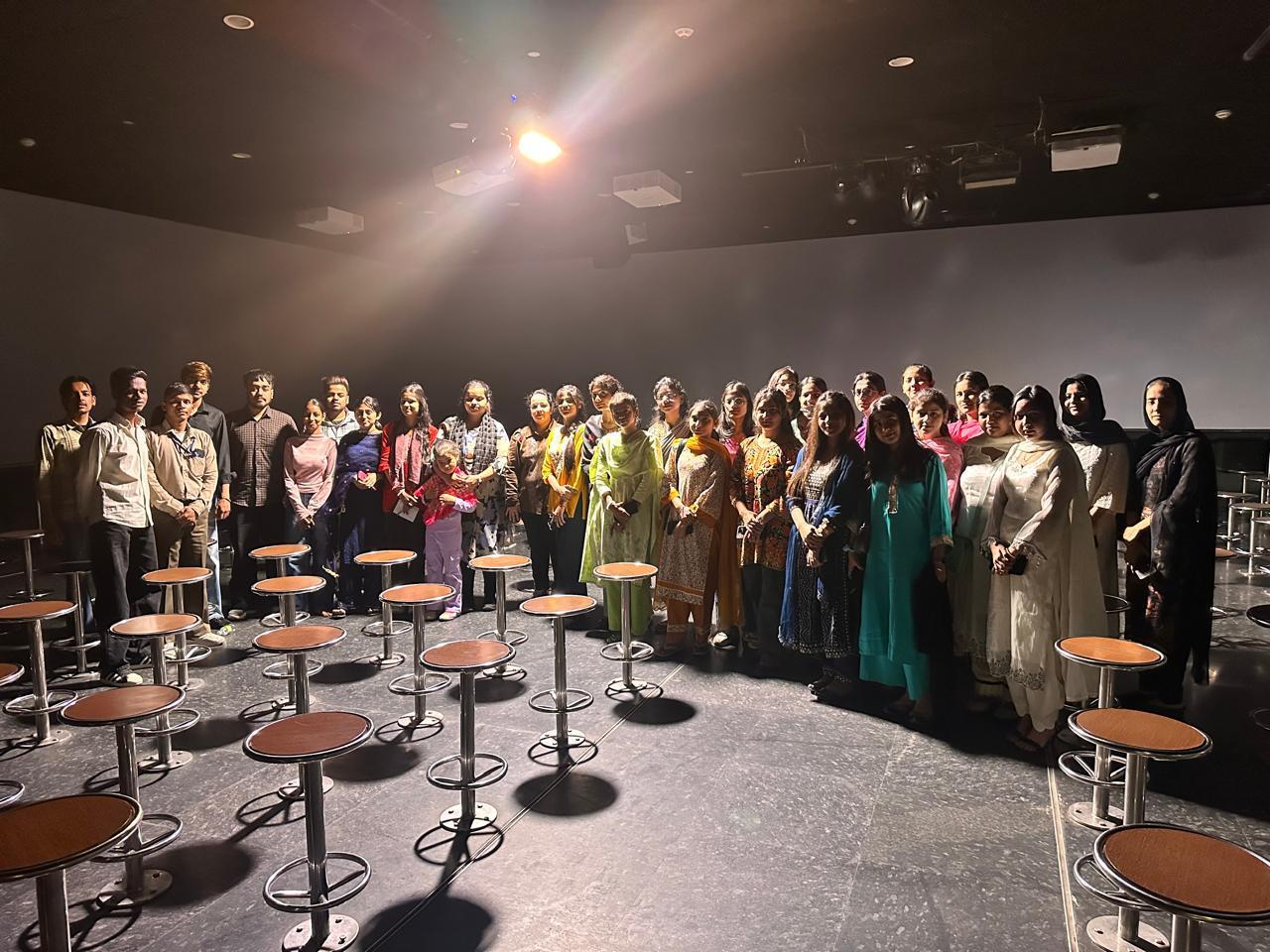
2.The Department of Geography and Tourism in collaboration with Department of Cosmetology organized an educational excursion to prominent historical and cultural sites in Amritsar, Punjab, namely Central Sikh Museum, the Partition Museum, and Jallianwala Bagh.
Gallery.
- Currently no Activity
Gallery.
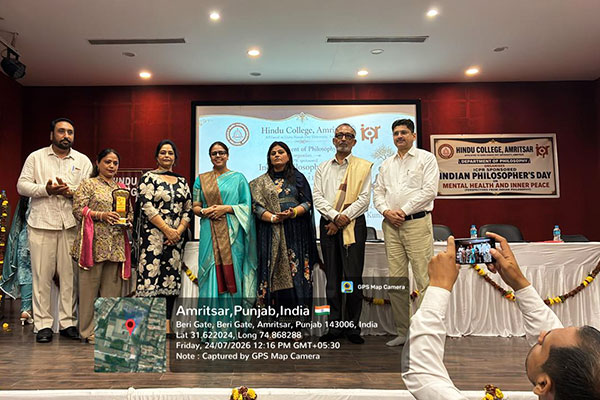
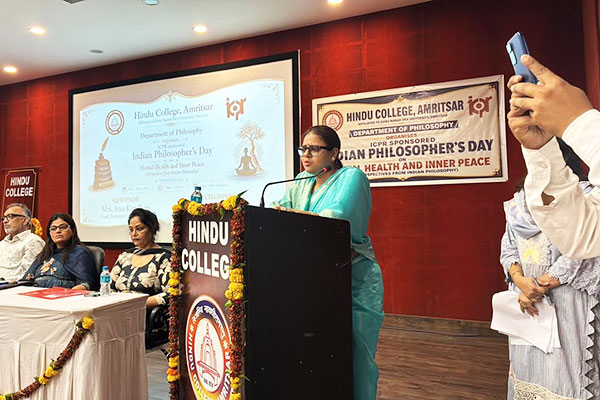
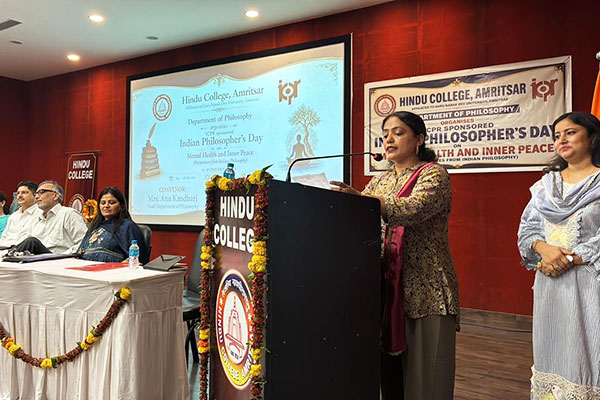
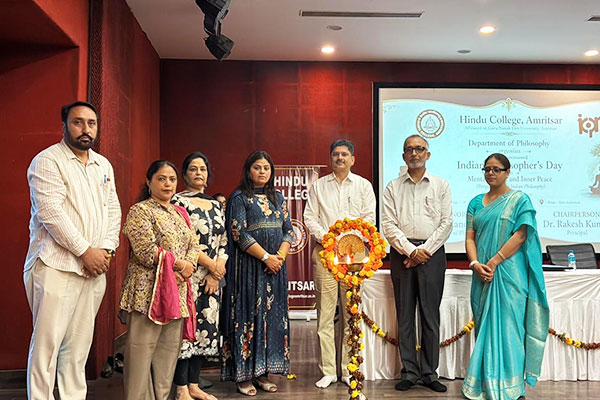
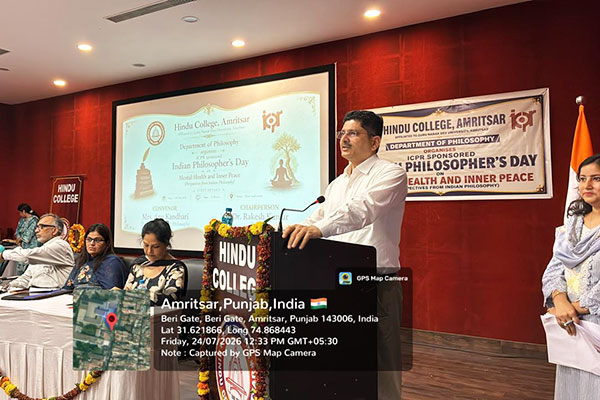
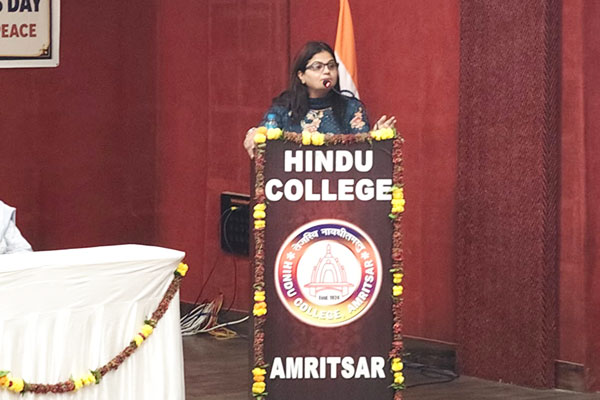
- 1. Activity of Philosophy Department
-
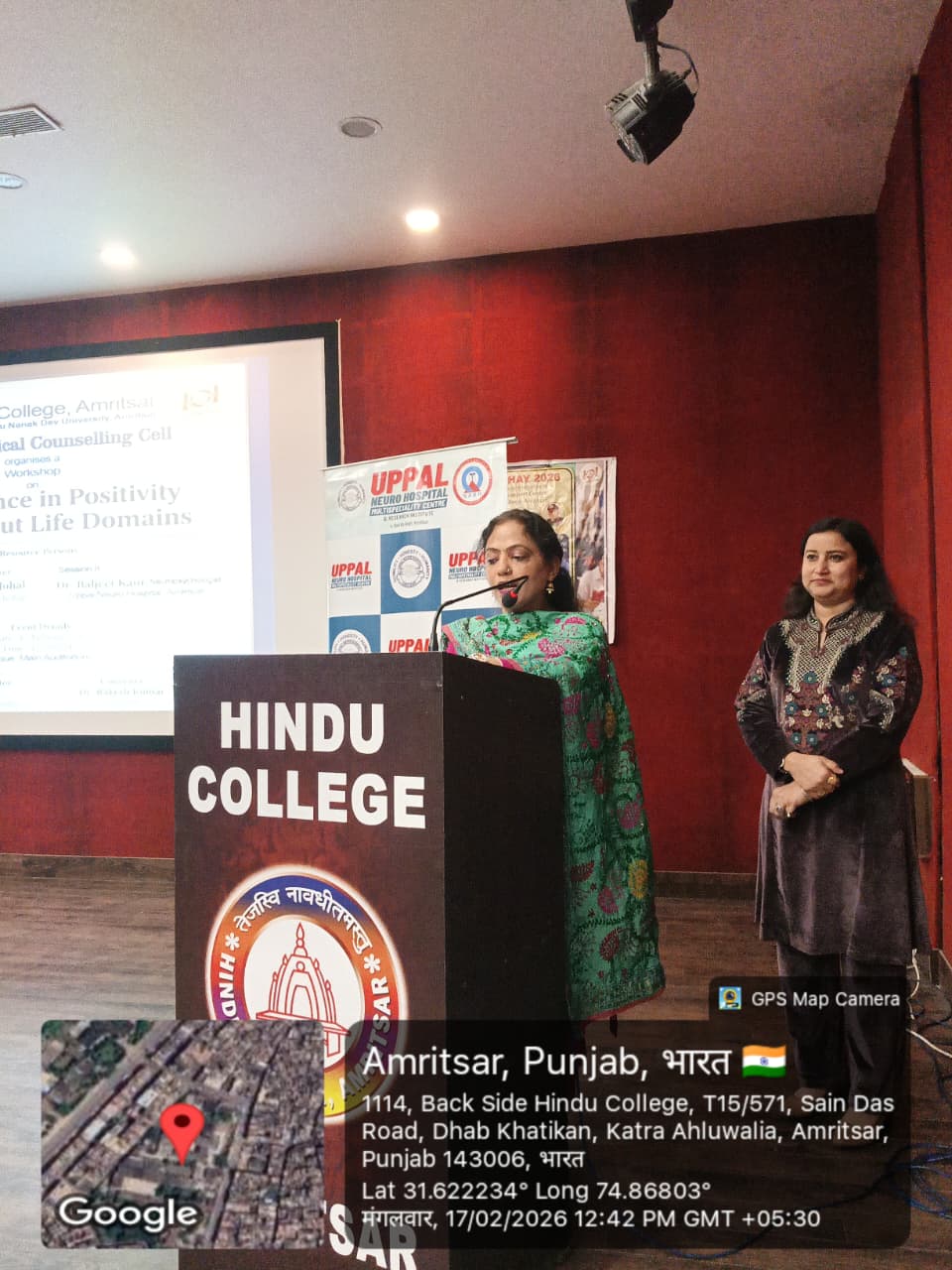
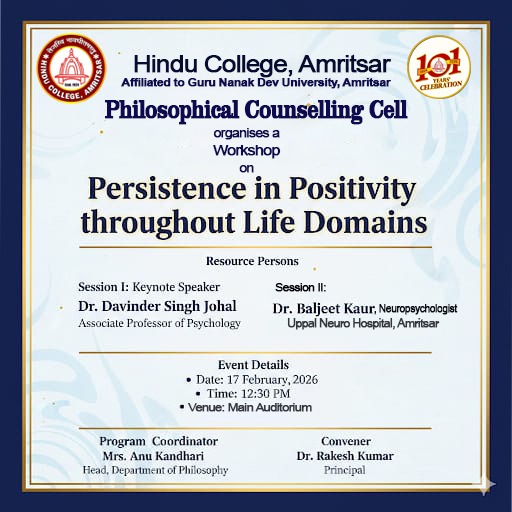
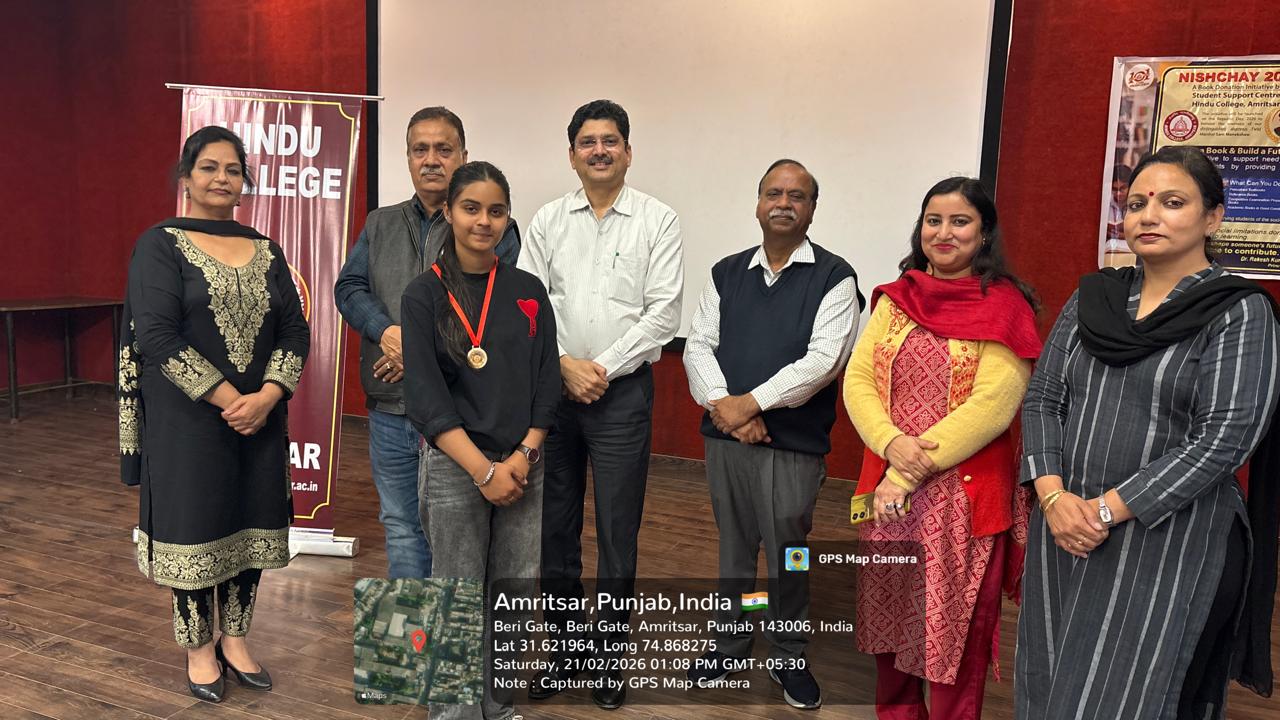
A workshop on “Persistence in Positivity Throughout Life Domains” was successfully organized by Philosophical Counseling Cell, Hindu College Amritsar to promote mental well-being, resilience and balanced living in everyday life. Esteemed Principal Sir welcomed the guests. The keynote speaker, Dr. Davinder Singh Johal, delivered an insightful lecture on the philosophical and psychological meaning of positivity.He emphasized self-awareness, emotional balance and value-based living as the foundation of a meaningful life. The expert talk was delivered by Dr. Baljeet Kaur, Neuro-Psychologist at Uppal Hospital. She discussed the scientific and neurological aspects of positive thinking. She explained how thoughts influence brain functioning, behavior and mental health. Practical techniques such as stress management, emotional regulation, healthy routines and mindfulness were also shared with participants.
-
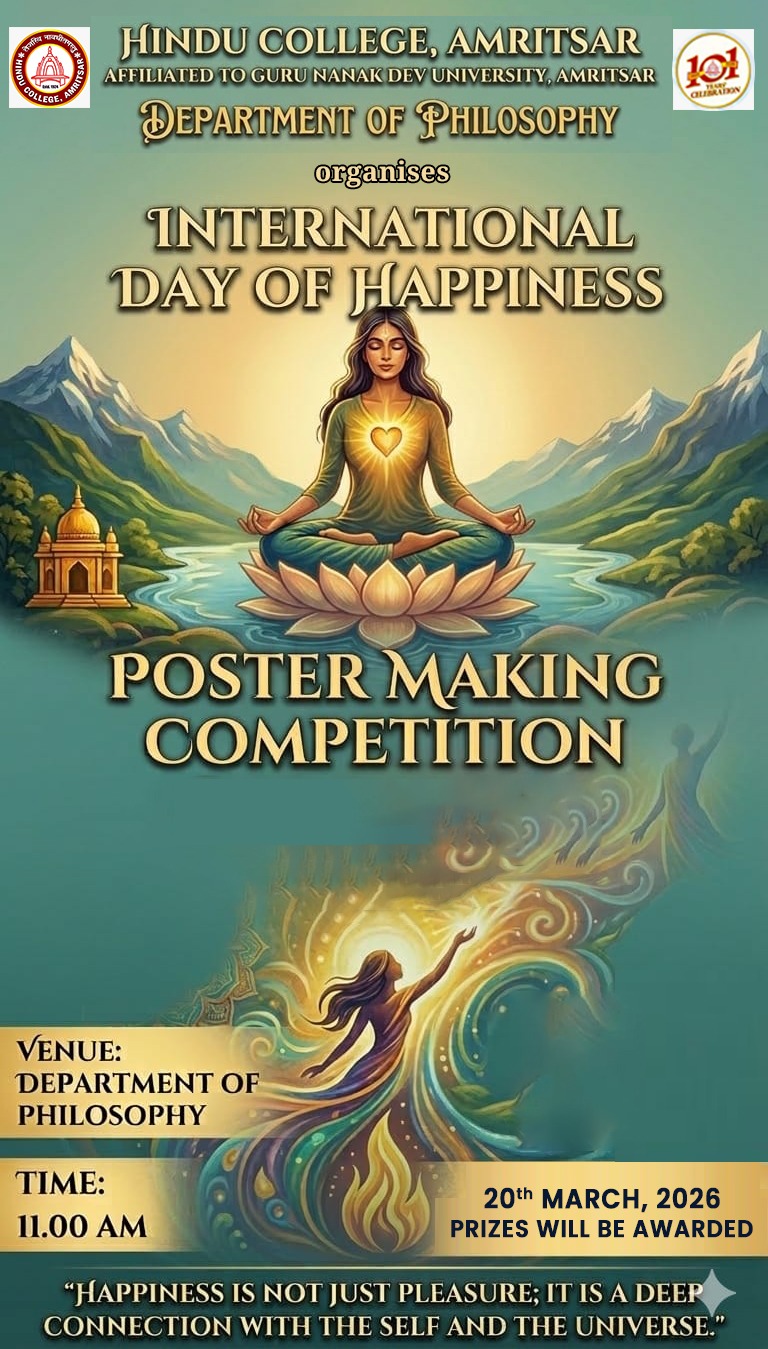
Department of Philosophy, Hindu College Amritsar organized a Poster Making Competition along with a Pledge Ceremony to promote awareness and positive values among students. The event witnessed enthusiastic participation, with students expressing their ideas creatively through impactful posters. The pledge ceremony encouraged students to commit towards happiness, mental well-being and social responsibility. The programme inspired students to adopt a positive and mindful approach in life. Principal Dr.Rakesh Kumar, in his address, appreciated the efforts of the department and students, highlighting the importance of such activities in shaping responsible and mindful individuals.
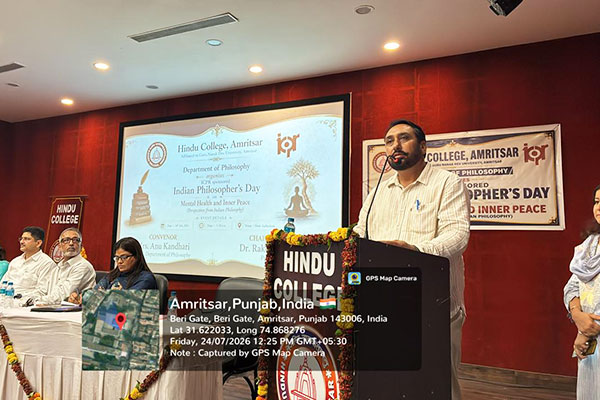
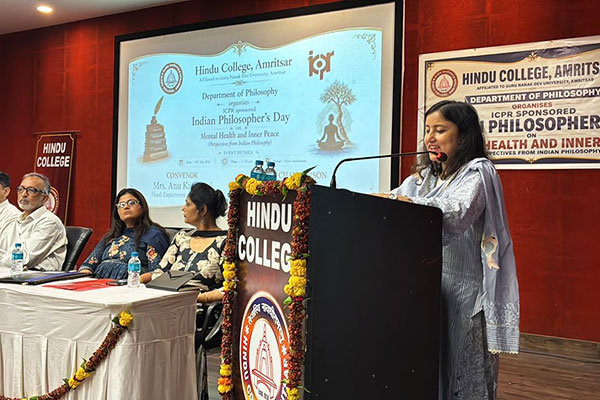
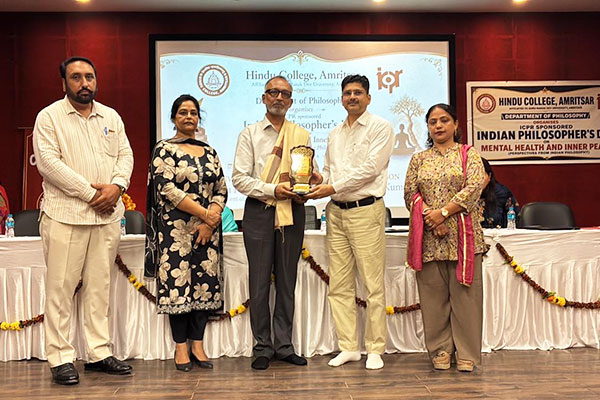
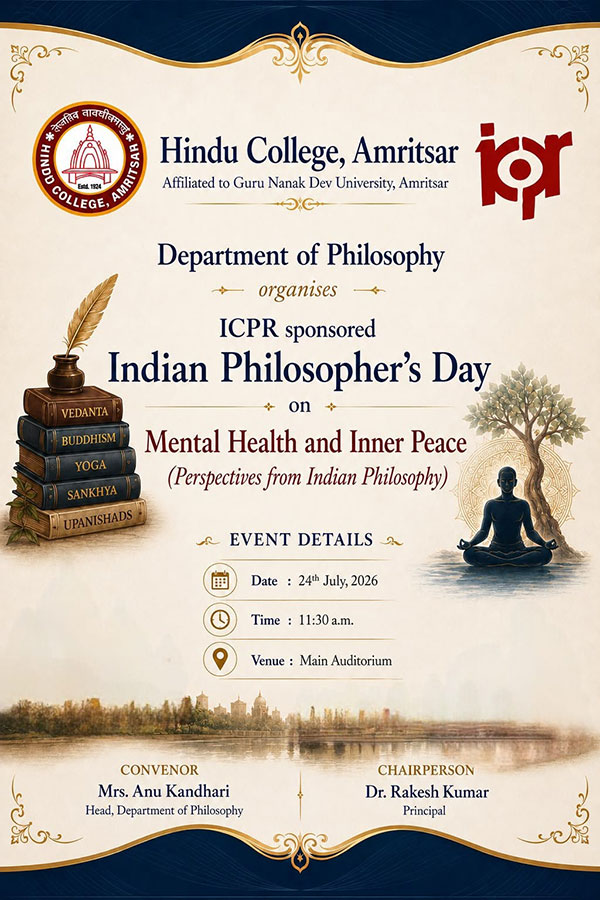
The Department of Philosophy, Hindu College, Amritsar celebrated Indian Philosopher’s Day on 24 July,2026 in the college auditorium. The theme of the programme was “Mental Health and Inner Peace: Perspectives from Indian Philosophy.” The programme commenced with the welcome address by the Principal, Dr. Rakesh Kumar who warmly welcomed the distinguished guests, faculty members and students. Dr. Deepti, Head, Department of Hindi skilfully conducted the stage proceedings throughout the event. Prof. Anu Kandhari,Head, Department of Philosophy introduced the theme of the event. Dr. J. P. Singh, Dean Academic Affairs addressed the gathering and emphasized the importance of the theme. Prof. Amit Kauts, Department of Education, Guru Nanak Dev University, Amritsar enlightened the students about the true purpose of education.Dr.Vijay Luxmi Rai from University of Jammu enlightened about the mental health from the perspective from Indian Philosophy. Dr. Parminder Jeet Kaur, Head, Department of Physical Education and Sports, BUC,Batala shared practical ideas for maintaining good mental health through physical activityand a healthy lifestyle.